Objects & Craft
Handmade Ceramics Vary And That Is The Specification
Variation in thrown and glazed pottery comes from processes that cannot be fully controlled, so uniformity would indicate a different manufacturing method entirely.

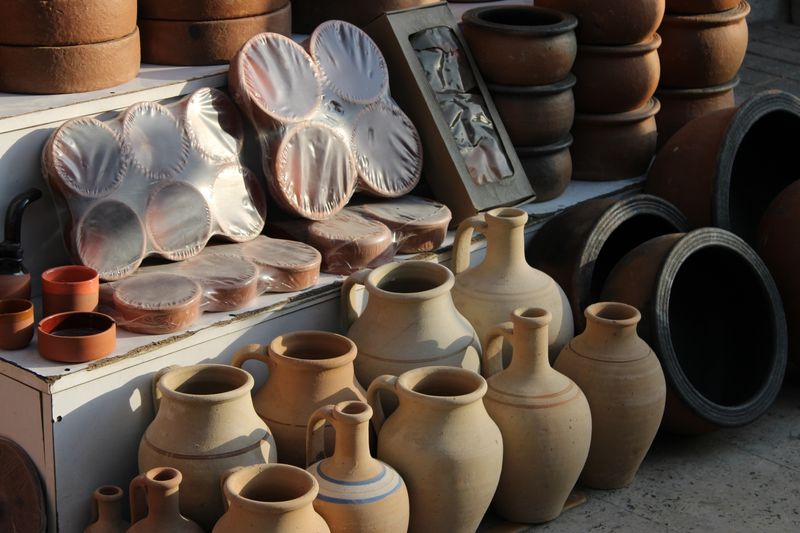
A set of handmade bowls will not match exactly. That is not a tolerance failure but a consequence of how the objects are made, and it is worth understanding before buying.
Throwing produces closely similar rather than identical pieces
A thrown pot is shaped freehand from a spinning ball of clay, and its dimensions depend on the potter's hands rather than a mould.
A skilled maker can produce a run remarkably close in size, and the remaining differences of a few millimetres are the record of that process.
Pieces made in a mould are identical because the mould is identical, which is why slip-cast production looks different from thrown work even under the same glaze.
Glaze is a chemical reaction with variables
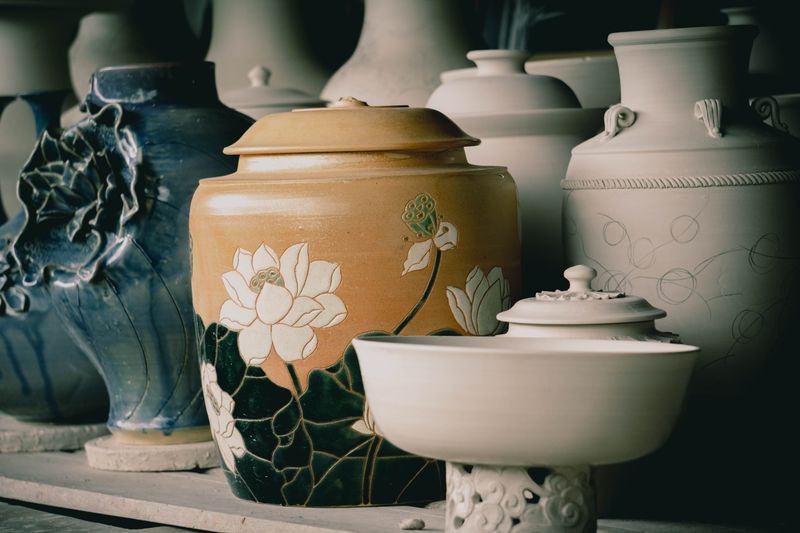
Glaze is a suspension of minerals that melts in the kiln and forms a glass layer, and its final colour depends on thickness, temperature and atmosphere.
Two pots dipped in the same bucket and fired in the same kiln can differ noticeably because they stood in different parts of it.
Some glazes are formulated specifically to break and pool over edges, so the variation is designed rather than tolerated.
Firing changes the size of everything
Clay shrinks as water and then chemically bound moisture leave it, and the total reduction from wet clay to fired pot is substantial.
Because shrinkage varies slightly with thickness and drying conditions, the finished dimensions are a result rather than a target.
This is why a maker quotes approximate sizes, and why a set of six will have a small spread in height and capacity.
Function still has hard requirements
Vitrification determines whether a piece holds liquid without seeping, and it depends on the clay body being fired to its proper temperature.
Glaze fit matters too, since a glaze that shrinks at a different rate from the body will craze into fine cracks that harbour moisture.
Whether a piece is suitable for the dishwasher or an oven is a property of its materials, and it is a reasonable question to ask a maker directly.
Buying a set is different from buying a piece
Matched sets are harder to produce and correspondingly dearer, because achieving consistency across many pieces requires rejecting a proportion of them.
Buying deliberately unmatched pieces sidesteps the problem entirely, and it means a broken bowl can be replaced with another that was never meant to match.
Questions readers ask
How often should a mattress be replaced?
Commonly quoted figures of seven to ten years come largely from the industry. The practical test is whether you wake comfortable and whether the surface has a permanent hollow.
Is a firmer mattress better for back pain?
Not necessarily; studies have generally found medium-firm to be preferred by more people than very firm. Anyone with persistent back pain should see a clinician rather than choose by rule.