Renovation
Living through a renovation costs more than people budget for
The decision to stay or move out is a cost calculation and a relationship one, and it is usually made by default.
The theory of living through building work is well covered elsewhere. This is about the version you meet in practice.
What holds up in practice
- Staying slows the work and reduces the price; moving out speeds it and costs rent.
- Dust and noise affect health and sleep, and construction dust can be hazardous.
- A functioning kitchen and bathroom are what determine whether staying is viable.
The trade is money against time and sanity
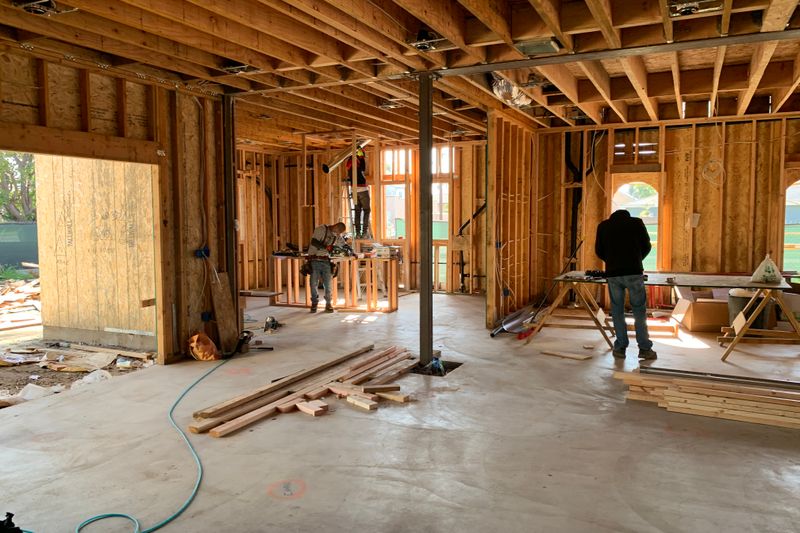
Working around occupants slows a build, because trades protect surfaces, work in sections and cannot leave the house open. An empty house is generally quicker and cheaper to work in, and the saving offsets some of the cost of living elsewhere. Ask the builder directly what difference it makes to the programme and the price, because the answer is often larger than expected.
That comparison, against the cost of temporary accommodation, is the actual decision.
What makes staying viable
A working bathroom, a way of making food, somewhere to sleep away from the work and somewhere to wash clothes are the four requirements. A temporary kitchen with a sink, a microwave, a kettle and a fridge in another room is a well-established arrangement. If a project takes out the only bathroom for more than a few days, staying stops being realistic for most households.
Sequencing the work so that one bathroom is always available is worth requesting explicitly at planning stage.
Dust is a health matter, not just a nuisance
Construction dust from cutting masonry, concrete, stone and some boards contains respirable silica, which causes serious long-term lung disease. Cutting should be done outdoors or with dust extraction and water suppression, and this is a legal requirement for workers in many countries. Occupants, and particularly children and anyone with a respiratory condition, should be kept out of areas where such work is happening.
Live with it a while and sealed dust barriers with zipped access, negative pressure where appropriate, and keeping doors shut make a large difference to the rest of the house.
Protecting what stays
Floors, stairs and joinery that are being retained need proper protection, and reinstating a damaged original floor is expensive. Agreeing in advance what will be protected and how prevents the most common source of end-of-project irritation. Packing away everything not in daily use, ideally off site, reduces both damage and the volume of cleaning at the end.
Photographing the condition of everything before work starts is worth the hour it takes.
Living with the people doing the work
Trades arriving early, needing access, using facilities and playing music are all normal and all worth agreeing at the start rather than negotiating daily. A single point of contact, and a regular short scheduled conversation rather than constant interruption, works better for both sides. Being available on site does tend to produce better outcomes on detail decisions, which is a genuine argument for staying.
Underneath it, it also produces more variations, which is a genuine argument against.
Taste is not the argument here; how a room performs is.
Plan for it taking longer
Renovation programmes slip for reasons that are frequently nobody's fault: weather, supply, discoveries once opened up, and other trades. Assuming the programme and budgeting temporary accommodation to the day is how people end up with nowhere to live in week fourteen. A contingency in time, as well as in money, is the realistic approach.
Households consistently report that the duration, rather than the disruption itself, is what wore them down.
The takeaway
Price the difference with the builder, protect one working bathroom, and take dust seriously rather than tolerating it.
A room that is used will always beat a room that is finished.
Questions readers ask
Is it cheaper to stay in the house during works?
Usually the build costs less if the house is empty, because the work goes faster. Compare that saving against rent elsewhere rather than assuming staying is cheaper.
Is construction dust dangerous?
Dust from cutting masonry, concrete and stone contains respirable silica and is a recognised serious health hazard. Keep occupants away from such work and insist on extraction or wet cutting.