Materials
Materials that age well and materials that only look new
Everything in a house is on a trajectory. Choosing well means choosing what you want it to look like in ten years.
This looks at how materials age from the practical end — what holds up once conditions stop being ideal.
What holds up in practice
- Solid materials wear; applied finishes fail.
- Patina is wear that reads as character; damage is wear that reads as neglect.
- Repairability is a better predictor of longevity than hardness.
Solid versus applied is the key distinction
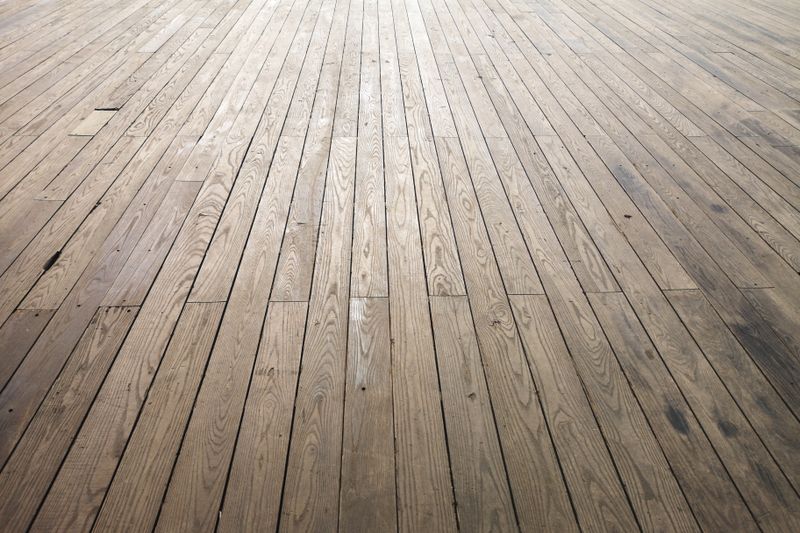
A solid timber floor, a stone worktop or a brass handle wears through its own substance and remains itself. A veneer, a laminate or a lacquer is a thin layer over something else, and once it is breached the underlying material is exposed.
That is why a scratched solid surface can be repaired and a scratched applied finish generally cannot. This single distinction explains most of the difference between things that look good after a decade and things that do not.
Patina requires the wear to be even
Materials that develop character — oiled wood, unlacquered brass, leather, limewash — do so because they wear gradually across the whole surface. Materials that fail locally produce a chip or a scratch that reads as damage rather than as age. Choosing for patina therefore means choosing materials whose wear is diffuse rather than concentrated.
On metals the change is oxidation rather than abrasion, driven by the acids and salts left by skin, which is why an unlacquered handle darkens everywhere except the exact patch hands touch, while a lacquered one does the reverse and develops a bare bright patch there.
Repairability beats hardness
An extremely hard surface resists damage and cannot be repaired when it eventually fails. A softer surface marks more readily and can be sanded, re-oiled or filled indefinitely. Over a long period the repairable material usually looks better, which is counterintuitive at the point of purchase.
The question worth putting to a supplier is narrow — can this be refinished in place, by whom, and will the material still be obtainable in five years — because a discontinued tile or a stone that is no longer quarried turns a small chip into a whole-floor job.
Consider the maintenance you will actually do
Oiled finishes look excellent and need reapplying; lacquered ones need nothing until they fail. Being honest about which you will do is more useful than choosing the one that performs best when maintained.
An unmaintained oiled worktop is worse than a lacquered one that was never going to be maintained either. Maintenance intervals follow use rather than the calendar, so the strip of worktop beside the sink and the two boards inside a doorway want attention several times as often as the rest, and spot-treating those instead of doing the whole surface is what makes the habit survive past the first year.
Where cheap is the right answer
In rented homes, in rooms whose use will change, and in anything a small child will destroy, a cheap replaceable material is the rational choice. The argument for durable materials assumes a long horizon, and not every surface has one. Spending the difference on the things that will stay is a better allocation than spreading it evenly.
Underneath it, the version of cheap that ages worst is the one imitating something expensive, because a printed timber effect or a thin stone-look laminate fails by announcing that it was never the material it depicted, whereas plywood, painted board and vinyl that never pretended simply wear.
Taste is not the argument here; how a room performs is.
Sun and water do most of the actual ageing
Ultraviolet light breaks down dyes, oils and plastics, which is why one end of a sofa fades, a rug lightens in a stripe where the sun crosses it, and timber floors shift colour unevenly depending on species. Water does its damage at edges and joints rather than across a face, so it is the cut-out around a sink, the bottom rail of an external door and the seam where flooring meets a shower tray that fail first.
Room to room, sealing the visible surface and leaving the cut edge raw is the standard mistake, and on a chipboard-cored worktop it is the one that ends the worktop rather than marking it. Moving rugs and cushions around occasionally, and treating every cut edge as the vulnerable part, costs nothing and decides which of these ever becomes visible.
The takeaway
Ask what it will look like scratched. That answer is the material decision.
A room that is used will always beat a room that is finished.
Questions readers ask
Is engineered wood as good as solid?
For stability over underfloor heating and in damp conditions, often better. The limiting factor is the wear layer thickness, which determines how many times it can be sanded.
Does unlacquered brass need polishing?
Only if you want it bright. Left alone it darkens unevenly where hands touch it, which is the point of choosing it.