Room by Room
Bedrooms are lit for cleaning and used for sleeping
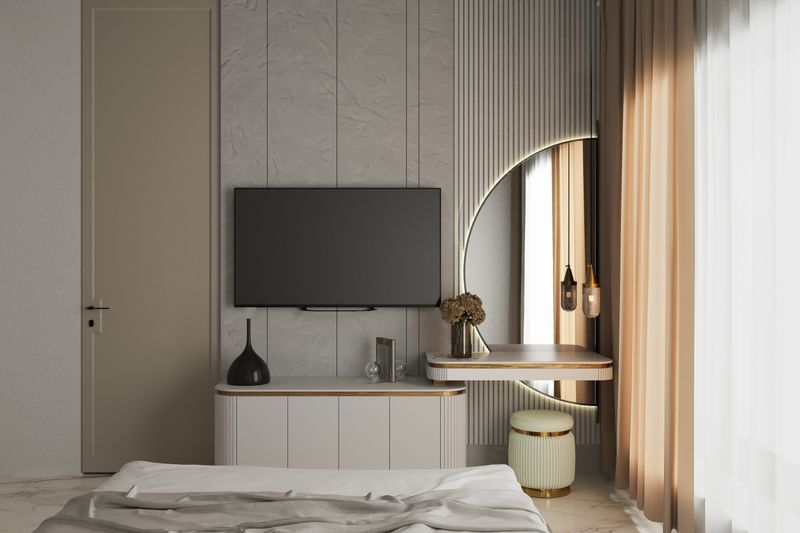
The overhead fitting in most bedrooms is the brightest thing in the room at the moment you least want brightness.
Both approaches to bedrooms work. What differs is what they cost you, and the cost is what this sets out.
The difference in one place
- A bedroom is used mainly in low light, and most are lit for daylight tasks.
- Bedside light that can be reached from lying down is the functional test.
- Clothes storage capacity determines whether the room stays calm.
The room is used at the two darkest hours of the day
A bedroom is occupied mostly in the half hour before sleep and the half hour after waking, both of which are low-light periods for the body. Lighting it with a single bright ceiling fitting means the only available setting is the one that suppresses the wind-down.
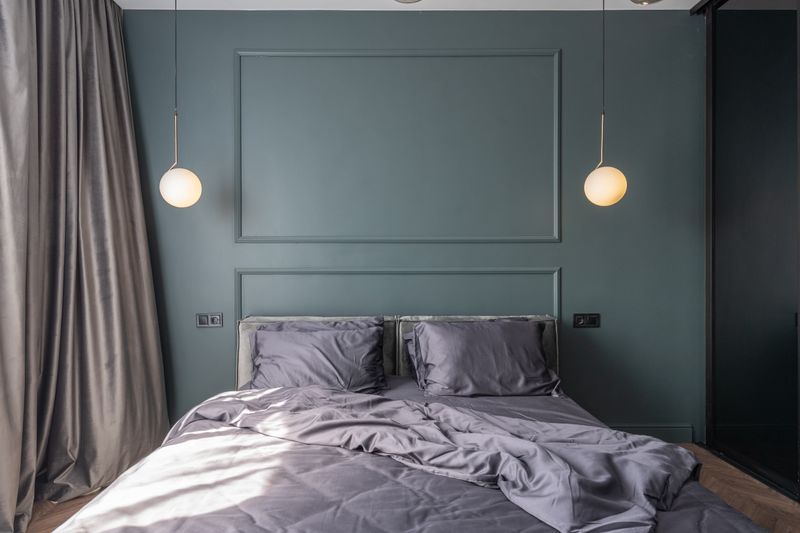
A pair of low, warm bedside lights and nothing else is enough for everything except finding a lost earring. Keep the ceiling light if you like, but wire or lamp the room so it is never the only option.
Reachability is the test for a bedside light
If you have to get out of bed to turn a light off, the lighting has failed regardless of how it looks. A switch on the flex, a wall light with a pull cord, or a smart bulb controlled from the bed all solve it for very little money.
Bedside lights also need to point at the book rather than at the other person, which usually means a shade with a closed top and an open bottom. Wall-mounted or clamped lights free the whole surface of a small bedside table, which is generally the more useful gain.
Clothes are the real spatial problem
Most bedroom clutter is clothing in transit — worn once, not dirty, no home — and no amount of wardrobe space solves it if there is nowhere for that category. A chair, a hook rail or a valet stand assigned to that specific pile stops it migrating across the room. Wardrobe depth of around six hundred millimetres is needed for hanging across the rail; shallower units force clothes to hang sideways and hold far less.
Room to room, counting your hanging metres before buying storage is a duller but more reliable method than estimating by eye.
Cool, dark and quiet is the specification
Sleep research has consistently found that a cooler room supports sleep better than a warm one, which is why an unheated bedroom is not a hardship. Blackout is more useful in summer and at northern latitudes than people expect, and a lined curtain achieves most of it without a blind. Radiators under the window are common and are a reasonable place for them, because the rising warm air counteracts the cold downdraught from the glass.
Trickle vents or a window left ajar matter here more than in other rooms, because two sleeping adults release a substantial amount of moisture overnight.
Where the bed goes sets everything else
The bed is the largest object and the only one whose position is genuinely constrained, so place it first and work outward. Access down both sides makes a double bed far easier to make and to get out of, and is worth losing a piece of furniture for.
A bed against a window is usually colder and draughtier; a bed against a party wall is usually noisier. Marking the footprint plus six hundred millimetres of access on the floor with tape shows immediately whether a bigger bed will actually fit.
Budgets and buildings differ, and old buildings differ most.
Noise is the hardest thing to retrofit
Airborne noise from neighbours travels through gaps, so sealing around sockets, skirtings and letterbox-sized penetrations helps more than adding mass in some cases. Impact noise from above travels through structure and cannot be fixed from below except by a suspended ceiling, which costs head height. Heavy curtains, a rug and upholstered furniture reduce reverberation within the room, which makes it feel quieter even when the source is unchanged.
Room to room, if noise is coming through a shared structure in a flat, treatments inside your room have limits, and the honest answer is often masking rather than removal.
Side by side
| Consideration | What it means in practice |
|---|---|
| The room is used at the two darkest hours of the day | A bedroom is used mainly in low light, and most are lit for daylight tasks. |
| Reachability is the test for a bedside light | Bedside light that can be reached from lying down is the functional test. |
| Clothes are the real spatial problem | Clothes storage capacity determines whether the room stays calm. |
The takeaway
Two warm bedside lights you can reach, somewhere for the worn-once pile, and a cooler room than you think you want.
Buy slowly. The gaps are not a problem.
Questions readers ask
Is a television in a bedroom a bad idea?
The evidence is about light and stimulation rather than the device itself. A screen at low brightness with warm tones an hour before sleep is much less disruptive than a bright one, whatever it is showing.
How dark should a bedroom be?
Dark enough that you cannot read by the ambient light. Full blackout suits shift workers and light sleepers; many people sleep better with some dawn light reaching them.