Room by Room
A spare room that is only spare is empty eleven months a year
Guest bedrooms are the least used rooms in most houses. The ones that work have a job the rest of the time.
What follows is an argument about spare rooms, and about where the received version of it stops being true.
The argument in brief
- A permanent double bed consumes the room for a handful of nights a year.
- Guests need a surface, a light and somewhere to put a bag more than they need a wardrobe.
- Sofa beds are chosen by the host and slept on by the guest.
Count the nights honestly
Most spare bedrooms are occupied somewhere between five and twenty nights a year, which is under five per cent of the time. A permanent double bed occupies around three square metres of a room for the other ninety-five per cent.
That is a defensible allocation in a large house and a poor one in a small flat, and the decision should follow the arithmetic rather than the convention. Households that give the room a weekday job and a weekend bed report using both.
What a guest actually needs
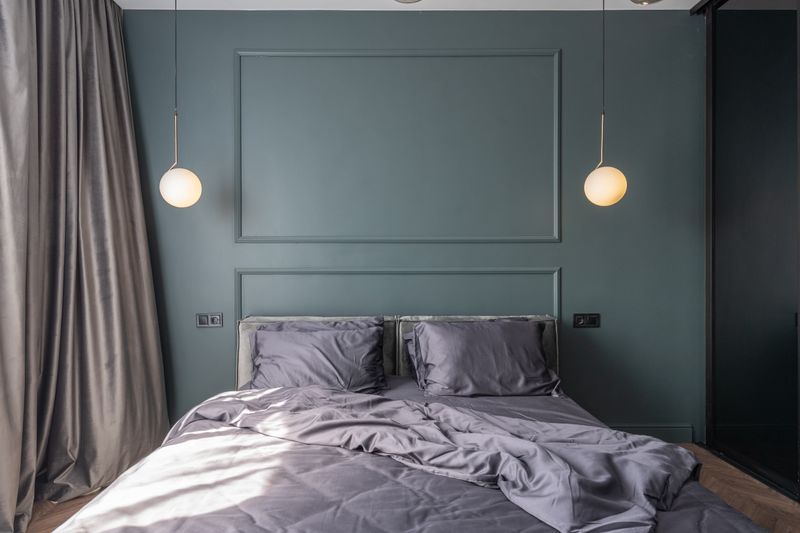
Somewhere to put a suitcase open, a surface by the bed, a reachable light, a mirror and a few hooks cover the great majority of guest requirements. A whole empty wardrobe is rarely used for a two-night stay, and the space is better spent on a luggage bench or a clear floor area.
A spare set of towels, a glass and a way to control the heating remove most of the small awkwardness of staying somewhere. These are inexpensive and are what people remember, far more than the bed frame.
The bed options and their real trade-offs
A sofa bed is comfortable to sit on and usually mediocre to sleep on, and the mechanism is the part that fails. A daybed with a proper mattress sleeps well and seats poorly, which is the opposite compromise and often the better one.
A folding or stowable bed with a real mattress, stored against a wall or under a platform, keeps the room usable and the sleep quality high. An inflatable bed is fine for occasional use and is the honest answer for a genuinely small flat.
The room usually becomes storage
The default fate of a spare room is to fill with the things that have nowhere else to go, at which point it stops being usable for either purpose. Giving the storage a defined boundary — a wall of closed cupboards rather than a floor of boxes — keeps the room habitable. Full-height built-in storage along one wall is the intervention that most often rescues a spare room.
Anything stored there should be things you genuinely revisit, or it is a slow-motion decision not to deal with them.
A working second use
A study, a music room, a workshop, a drying room or a place for someone to be alone are all higher-utilisation uses than occasional guests. The compatible combination is one where the daily use packs away in a few minutes: a desk clears faster than a workbench. Where the second use cannot pack away, the honest answer is that guests get the sofa, and that is usually fine.
Deciding this explicitly is better than the room silently defaulting to neither.
Budgets and buildings differ, and old buildings differ most.
Heat, air and a room that is shut
A room heated only when occupied runs colder than the rest of the house, and its walls will be the coldest surfaces available for condensation. Keeping the door open and a low background heat on prevents the mould that appears in unused rooms in winter.
Over years, airing the room and the bedding before a guest arrives is the difference between a room that feels cared for and one that feels stored. A cheap humidity meter left in a little-used room tells you whether the condition is a problem or a suspicion.
The takeaway
Give the room a weekday job, a stowable bed with a real mattress, and somewhere for a guest to open a bag.
Buy slowly. The gaps are not a problem.
Questions readers ask
Is a sofa bed or a daybed better?
A daybed with a real mattress sleeps better; a sofa bed sits better. Choose according to which function you will use more hours a year, which is almost always the sitting.
How do I make a small spare room work?
Full-height storage on one wall, a bed that stows or a daybed, a good bedside light and a clear space to open a suitcase. The wardrobe is the item to sacrifice.