Renovation
Why Costs Move Once The Walls Are Opened Up
A renovation quote prices what can be seen, and opening a building reveals conditions nobody could survey, which is why contingency is a line item rather than optimism.

Budgets on renovation projects rarely fail because of poor pricing. They fail because the building contained information that could not be known until it was opened.
A survey can only reach what is accessible
Inspection before work starts is largely visual. Floors are down, walls are plastered and services are buried, so a great deal is inferred rather than observed.
An experienced surveyor reads the symptoms and predicts the likely causes accurately most of the time, but a prediction is not the same as a measurement.
The gap between the two is where extra cost lives, and it is wider in older buildings that have been altered repeatedly by people who left no record.
Previous work is the commonest surprise
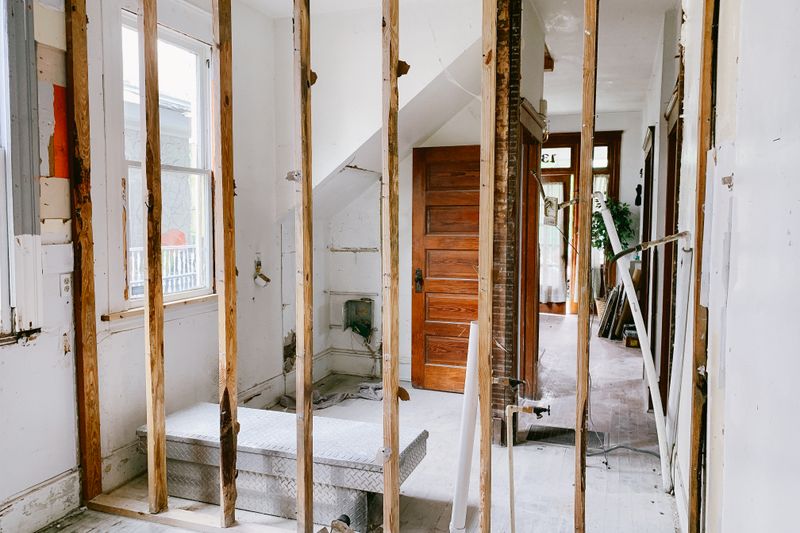
Alterations made over decades are frequently undocumented and sometimes improvised. A wall may have been removed without adequate support, or a beam notched to route a pipe.
None of that is visible until the finishes come off, and once it is visible it usually cannot be left, because knowing about a defect changes the obligation to address it.
This is the mechanism by which a kitchen refit becomes a structural job, and it is common enough that it should be expected rather than treated as bad luck.
One discovery tends to produce others
Problems in buildings cluster, because they share a cause. Water that has damaged one joist end has usually reached the ones beside it.
Opening a floor to fix a single joist therefore often reveals that the whole run needs attention, and the cost multiplies rather than adds.
Trades understand this and price the visible work only, which is why the initial figure is honest and the final one is larger.
Contingency is a technical provision
A contingency is not a buffer against overspending. It is an allowance for work that is known to be probable but cannot be specified in advance.
Setting it aside as a separate figure, rather than hoping the main budget stretches, keeps decisions calm when the discovery is made.
The size of the provision should scale with uncertainty. An old building being altered structurally justifies a much larger allowance than a straightforward redecoration.
Sequence the unknowns early where you can
Opening up in advance, even destructively in a small area, converts guesses into facts while the design can still change cheaply.
Lifting a few boards, cutting an inspection hole and looking into a roof void before the drawings are finished costs very little and moves surprises to the phase where they are least expensive.
Questions readers ask
Do I need drawings for a small job?
You need something written. A schedule of what is included, what materials are specified and how the junctions are finished prevents most disagreements, even without formal drawings.
Why do variations cost so much?
Because they include undoing work already done and disrupting the sequence for other trades. The direct cost of the change is often the smallest part.