Light
North-facing rooms are not a problem to be corrected
Trying to make a cool room feel warm with paint usually fails. Working with the light produces better rooms.
What follows is the working version of north-facing rooms: the decisions in the order you actually meet them, with the reasoning attached.
Before you start
- North light is consistent and cool, which is why studios were built for it.
- Warm paint in cool light frequently reads muddy rather than warm.
- Adding warmth through artificial light and materials works better than through wall colour.
North light is a quality, not a deficiency
North-facing rooms receive indirect light that barely changes through the day and shows colour consistently. That is precisely why artists' studios were traditionally north-facing, and why the light is described as good rather than poor. The complaint about north rooms is usually about warmth and brightness rather than about quality.
Accepting the character of the light produces better results than fighting it.
Warm paint often reads muddy
A warm colour chosen to compensate for cool light frequently loses its warmth and reads as dull or dirty. Colours with a slight cool undertone, or genuinely saturated ones, generally hold up better in north light than pale warm neutrals.
Deep colours in particular work well, because the room is not going to be bright regardless and a dark scheme reads as deliberate. The mechanism is subtraction: a surface can only return wavelengths that reached it, and indirect northern skylight is comparatively short of the reds a warm neutral depends on, so the pigment is left showing its grey component instead.
Add warmth through light and material
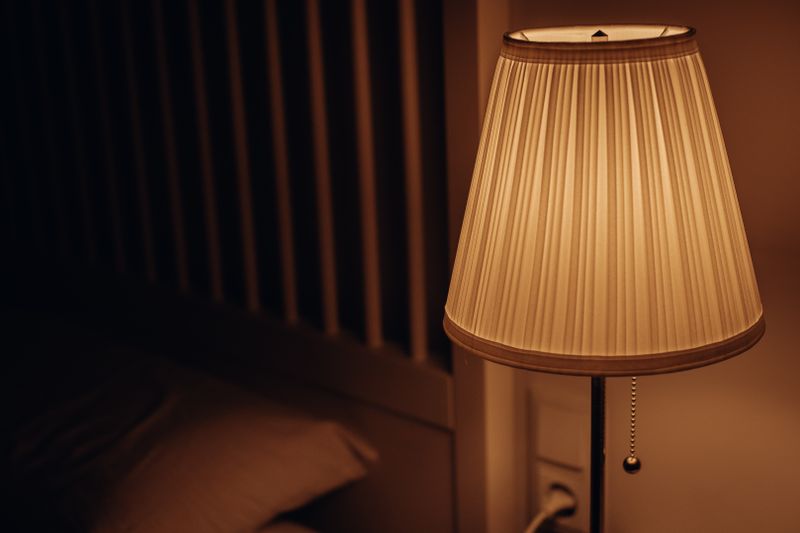
Warm-toned artificial lighting, used generously, does far more than wall colour to make a cool room feel comfortable. Timber, wool, leather and other warm materials contribute more than paint because they occupy the room rather than its boundary. This is the practical route and it is consistently more effective.
Room to room, it matters too that a north-facing sitting room is often used most after dark, when the daylight argument is irrelevant and the only light in the room is the light you chose, which makes the fittings a larger decision here than the orientation ever was.
South-facing rooms have the opposite problem
Strong direct sun bleaches colours, creates glare and overheats, and colours chosen in a south room will look quite different elsewhere. Cooler and more saturated colours hold their character better under strong light. Shading — blinds, planting, overhangs — matters more in these rooms than any decorative decision.
Shading works far better outside the glass than inside it, because a blind hung behind the window has already admitted the energy and can only re-radiate it, which is why external shutters, an awning or a deciduous tree beat any curtain for heat even where they are less convenient.
Test in the room, in the light it has
Every colour decision is orientation-dependent, and a colour that works in one room can fail in another in the same house. Large primed samples viewed at different times of day are the only reliable method. Photographs of rooms online are almost always taken in south light or with supplementary lighting, which is why colours disappoint.
What sits outside the window enters the room as well: a brick wall opposite pushes warm light in, a garden in leaf pushes green, and both change with the season, so a colour approved in February can look like a different decision in July for reasons that have nothing to do with the paint.
What photographs well and what lives well are frequently different rooms.
East and west rooms change character during the day
An east-facing room takes direct sun early and then flat indirect light for the remainder of the day, so the colour it has at breakfast is not the colour it has at six in the evening. West-facing rooms do the reverse and receive low, strongly orange light late on, which pushes reds and yellows further and can turn a carefully chosen neutral distinctly pink. Which of the two suits a room depends on when it is used rather than on the orientation itself, so a bedroom and a sitting room in the same house want opposite answers.
Underneath it, low morning and evening sun also arrives horizontally, under any overhang and straight across the room rather than down onto the floor, which is why east and west rooms glare and overheat more than their hours of sun would suggest.
The takeaway
Work with the light you have. Compensating for it with paint rarely succeeds.
The best rooms look like a decision, not a purchase.
Questions readers ask
Should I paint a north-facing room white?
Plain white often reads grey and flat in north light. An off-white with a warm undertone, or a deliberately deeper colour, usually looks better.
Can I make a dark room bright?
Not really, through decoration alone. You can make it feel deliberate and comfortable, which is usually the better outcome. Structural changes are the only route to genuinely more daylight.