Light
Glare is why a bright room can be uncomfortable
Adding more light to a room that already hurts to be in usually makes it worse. The problem is contrast, not quantity.
This works through glare in the order the parts actually depend on each other.
The short version
- Glare is caused by excessive contrast within the field of view.
- A visible bare lamp above eye level is the commonest domestic cause.
- Shielding, diffusing and raising surrounding brightness all reduce it.
What glare actually is
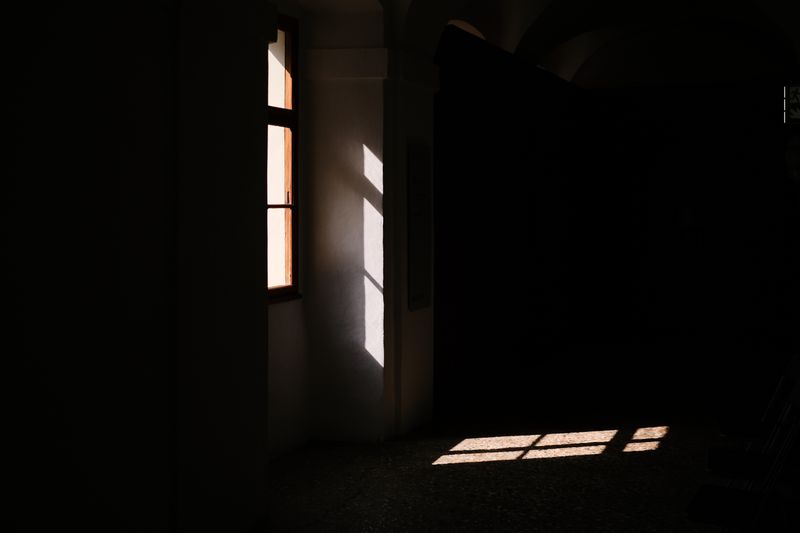
Glare occurs when part of your field of view is far brighter than the rest, forcing the eye to adapt to two conditions at once. Discomfort glare makes a space unpleasant without stopping you seeing; disability glare actively prevents you seeing, like headlights at night.
Both are about the ratio between bright and dark rather than about absolute brightness, which is why a bare bulb in a dark room is worse than the same bulb in a bright one. This is also why adding a second, dimmer light source often makes a room more comfortable than turning the first one up.
The bare lamp above eye level
Any exposed lamp sitting above eye height sends light directly into the eye from an angle the eye cannot avoid, which is the standard domestic glare source. Decorative filament bulbs in open fittings are attractive at very low output and unpleasant at anything useful.
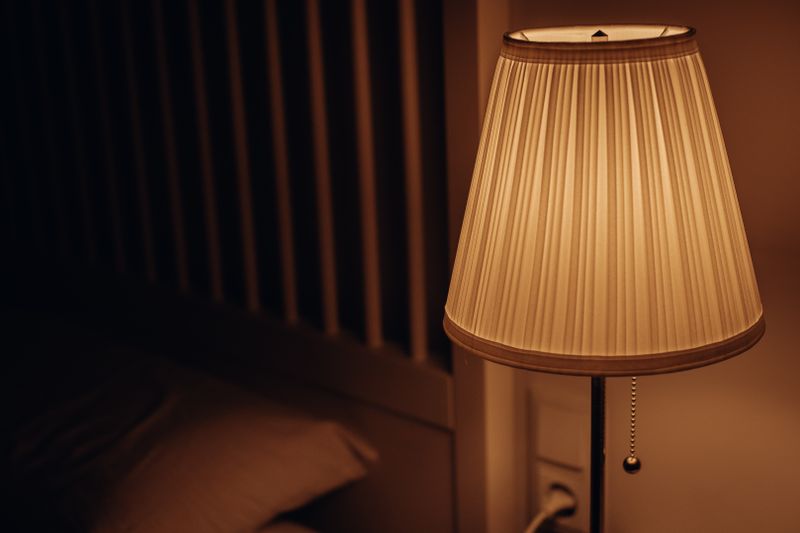
Shades that are open at the top and closed or diffused at the bottom light the room without the source being visible from a seated position. Sitting down in a room and looking around at eye level is the whole diagnostic.
Reflected glare on surfaces
A glossy worktop, a polished floor, a glazed picture or a screen reflects a light source into your eyes from an angle you did not choose. Moving the source, or making the surface matt, are the two fixes; increasing brightness is not. This is a strong argument for matt or honed finishes in kitchens with downlights, and for matt screens in bright rooms.
Room to room, the reflection angle is predictable, so a light moved a metre often disappears from the reflection entirely.
Daylight glare is the bigger problem
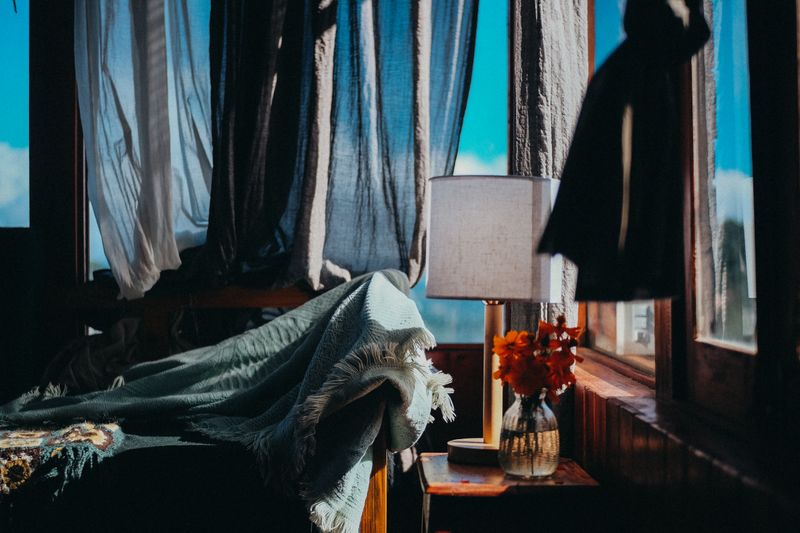
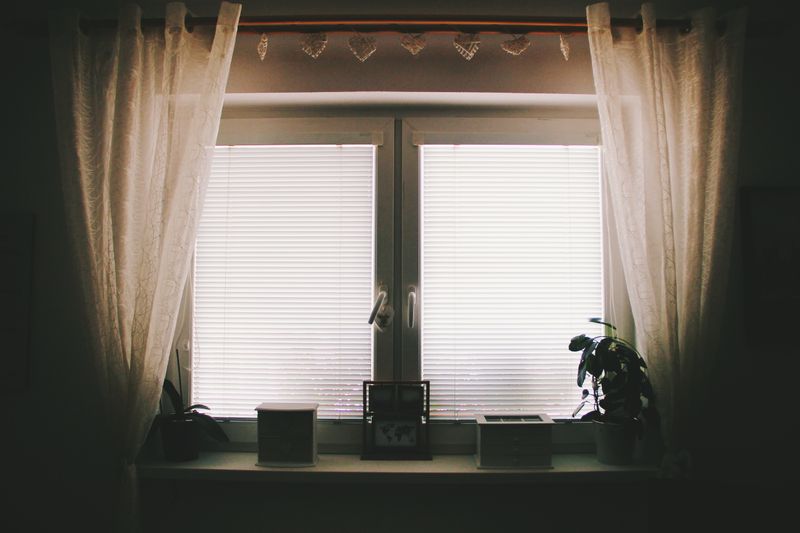
The sun is enormously brighter than any lamp, and a low winter sun through a west window can make a room unusable in the afternoon. Slatted blinds, sheers and shutters that redirect light to the ceiling preserve daylight while removing the direct view of the source. External shading — overhangs, planting, awnings, external blinds — is much more effective than internal shading because it stops the energy before it enters.
Any room used for screen work needs a strategy for the hours the sun is in the window, not just for the average day.
Screens and the wall behind them
A screen in front of a bright window is a dark object against a bright field, which is the classic contrast problem and causes real fatigue over a working day. A dim wall behind a bright screen in an otherwise dark room causes the same problem in reverse.
In practice, putting some light on the wall behind and around a screen brings the surroundings closer to the screen brightness and reduces strain. Bias lighting behind a television does exactly this and is the reason it improves comfort in a dark room.
Anything structural belongs with a qualified professional, not an article.
Where glare is a safety issue
On stairs, glare that obscures the tread edges is genuinely dangerous, particularly for older adults whose eyes adapt more slowly. Bathrooms and kitchens with wet floors and reflective surfaces are the other places where visual discomfort becomes a hazard.
In practice, low-level lighting at night, and sources shielded from the direction of travel, address both. For anyone with a diagnosed eye condition, sensitivity to glare can be much greater, and lighting advice should come from their optometrist or clinician.
The takeaway
Sit down, look around, and hide any source you can see. Then raise the brightness of everything else.
A room that is used will always beat a room that is finished.
Questions readers ask
Will a brighter bulb fix a room that feels dim but harsh?
Usually not. If the room is harsh, the problem is contrast, and adding output to a single visible source increases the contrast. Add another softer source instead.
Are exposed filament bulbs a mistake?
They work at very low output as a visible feature and fail as a room's light source. If you want the look, dim them heavily and light the room with something else.