Room by Room
The Kitchen Sink Position Decides Where People Stand
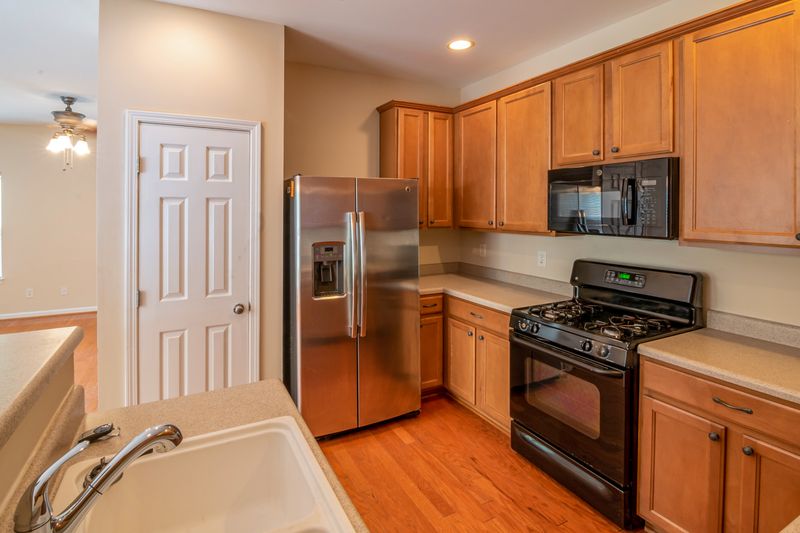
More time is spent at the sink than at any other point in a kitchen, so its position determines the room's traffic, its view and where conversation happens.

Kitchens are planned around cooking, but the sink is where most of the standing time actually goes. Its position sets the room's centre of gravity.
It is the most occupied position in the room
Filling, rinsing, washing and draining accumulate through the day, and they are interruptible tasks that people return to repeatedly.
That means somebody is standing there for long stretches, facing whatever the sink faces, with their back to whatever it does not.
Placing it thoughtlessly means the household spends its kitchen hours looking at a wall in a room with a window elsewhere.
The traditional window position is not sentiment
A sink under a window gives daylight onto the task and a view during a repetitive one, which is why the arrangement persisted for so long.
It also puts a wet zone where moisture can be ventilated easily, and where splashing onto a hard surface matters least.
Where a window is unavailable, the same reasoning suggests facing the room rather than a blank wall, so the person at the sink is not excluded from it.
Distance to the hob and the bin governs the work
Water goes to pans and comes back from them, so a long walk between sink and hob is repeated many times in a single meal.
The bin belongs in the same short orbit, since scraping and rinsing happen together, and a bin across the room is a bin that gets carried to.
Dishwasher position follows from the sink for the same reason, and a door that opens across the route between them is a daily obstruction.
Drainage constrains where it can move to
Relocating a sink means relocating the waste, and the waste needs a fall to the stack that the floor construction may not permit.
Moving it along the same wall is usually straightforward. Moving it to the opposite side of the room can be the largest single cost in a refit.
This is why sinks so often stay where they are, and why designs that move them should carry the drainage answer alongside the layout.
One sink or two is a question about simultaneity
A second sink is only useful if two people regularly work at once, since one person cannot use both.
Where they do, separating preparation from washing removes the commonest bottleneck in a busy kitchen, and it is more valuable than additional worktop.
Questions readers ask
Does a boot room need heating?
It needs air movement more than heat. A little warmth helps drying, but without ventilation the moisture simply condenses somewhere in the house.
What if there is no space for one?
A bench, a run of hooks and a long barrier mat along one wall of a hallway does most of the work. The sequence matters more than the room.