Light
How a room is switched decides whether its lighting ever gets used
People use the switch by the door and ignore everything else. A lighting scheme that needs four separate journeys to set up will be abandoned within a fortnight.
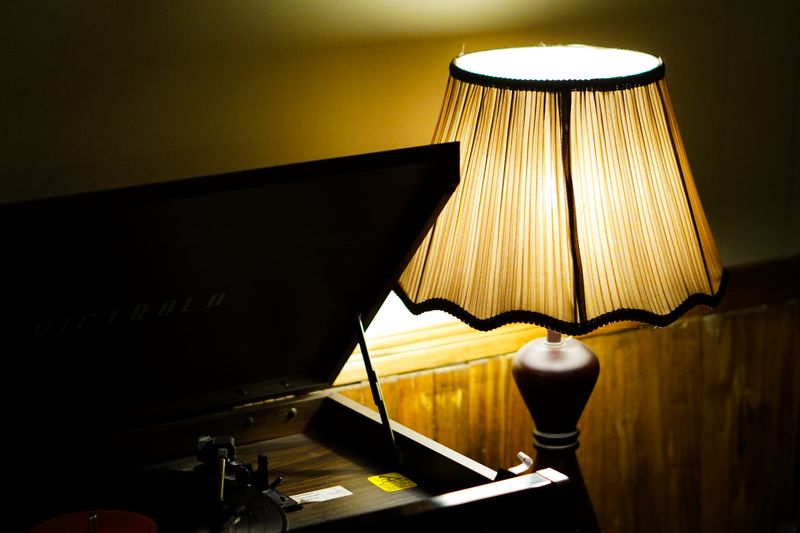
This works through switching and controls in the order the parts actually depend on each other.
The short version
- Lights that need a walk around the room to turn on get left off.
- Grouping circuits by activity beats grouping them by fitting type.
- Switched sockets let lamps be controlled from the door without new wiring.
The switch by the door wins
Whatever is on the switch nearest the door is what gets used, every evening, by everyone including guests who do not know the room. Lamps that require crossing a dark room to reach a small switch on a cable get turned on when someone is already settled, or not at all.
This is why beautifully specified schemes collapse into the one overhead fitting within weeks of moving in. The fix is rarely more light; it is putting the light that already exists onto a control someone will actually reach. Designing the switching before the fittings tends to produce a room that gets used the way it was drawn.
Group circuits by what people are doing
A room typically has two or three modes: working or cleaning, sitting and talking, and watching something in near darkness. Circuits arranged around those modes let one action change the room, instead of four actions producing a compromise. Grouping by fitting type, all the downlights together and all the wall lights together, describes the ceiling plan rather than the evening.
A useful test is to name each switch after an activity; if it cannot be named, the grouping is probably arbitrary. Two well-chosen groups beat five that nobody remembers, because the point is a decision made without thinking.
Long rooms, corridors and stairs
Any route people travel needs control at both ends, or half of it gets walked in the dark and the lights get left on all evening. Two-way switching does this with fixed wiring, and it is the standard arrangement for staircases and through rooms for exactly that reason. Open-plan spaces need thinking of as several rooms for switching purposes, because one control for the whole floor forces an all-or-nothing choice.
A kitchen that shares a space with a sitting area particularly needs separate control, since the two activities want very different levels. Where an area is used at night, a low-level circuit that avoids full brightness is more useful than a dimmer nobody adjusts carefully.
Where switches physically sit
Switch height and side matter: on the handle side of a door, at a height reachable with an armful of shopping, in the same position in every room. A bedroom needs control at the door and at the bed, and the absence of the second one is the most common bedroom lighting fault. Banks of identical switches are unreadable in the dark, so people press two and then correct, which is a small daily friction.
Fewer, better-placed switches reduce that friction more than labelling ever does.
Moving a switch means altering fixed wiring, which is regulated work in most countries and belongs to a qualified electrician.
Controls that do not need rewiring
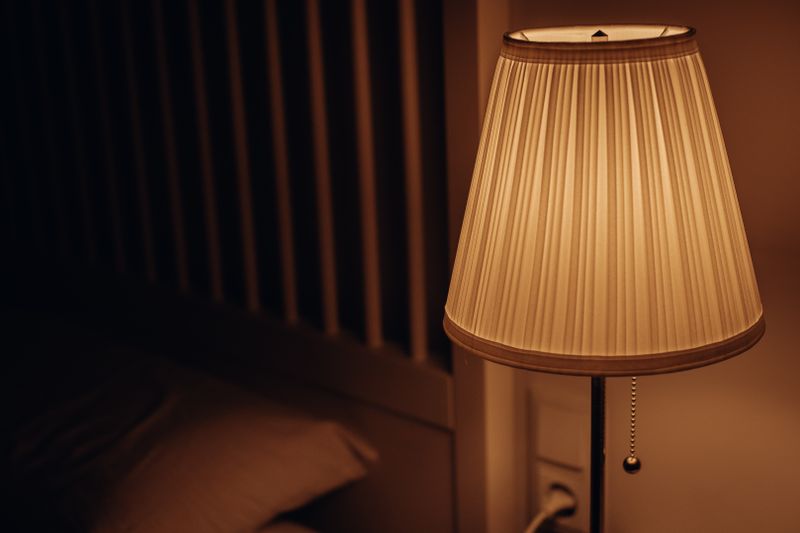
A switched socket controlled from the door lets a floor lamp behave like a wired fitting, and it is a common and inexpensive arrangement. Plug-in remote sockets and wireless switch plates achieve similar results reversibly, which suits rented homes where wiring cannot be altered.
Smart lamps and plugs move the control into an app, which is convenient for the owner and confusing for everyone else in the house. A physical switch that anybody can find and press remains the most reliable interface, and it still works when a network is down. Where smart control is used, keeping a working manual switch as well avoids a room that cannot be lit by a visitor.
Sensors, timers and their limits
Occupancy sensors work well in spaces people pass through with full hands, such as a utility room, a cupboard or an outdoor step. They work badly in rooms where people sit still, because the lights go off while everyone is reading and nobody moves enough to trigger them. Timers suit outdoor and security lighting and anything you would otherwise forget, and they avoid lights burning through the night.
In practice, daylight sensors save more than they appear to in circulation spaces that get switched on out of habit at any hour. The general rule is to automate the places where a decision is a nuisance, and leave the rooms people inhabit under manual control.
The takeaway
Put the light people want on the switch they will reach, and name every circuit after an activity.
A room that is used will always beat a room that is finished.
Questions readers ask
How many lighting circuits does a living room need?
Usually two or three, grouped by activity rather than by fitting type, all controllable from the door. More than that tends to go unused.
Can I control lamps from the doorway without rewiring?
Yes. A switched socket, a plug-in remote socket or a wireless switch plate all do it, and the last two are removable when you leave a rented home.