Light
The central ceiling light is a habit, not a decision
One fitting in the middle of the ceiling is what the wiring offered, and rooms have been lit that way ever since. It is a poor default for almost everything a room is used for.
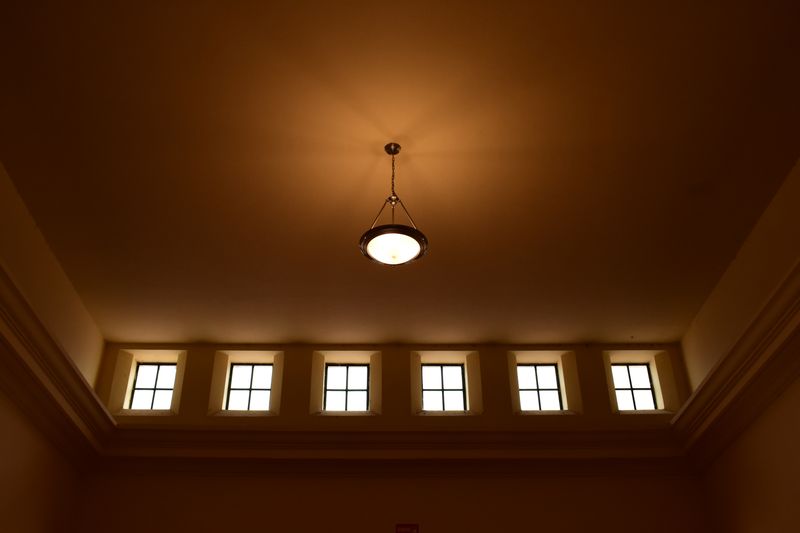
Comparisons of ceiling lights usually pick a winner. This one picks the circumstances, which is more useful.
The difference in one place
- A single overhead source lights the floor well and faces badly.
- Several low-output sources at different heights read as brighter than one bright one.
- Downlight grids are laid out for the ceiling plan rather than for what happens below them.
Why the middle of the ceiling
A single pendant point is the cheapest way to wire a room, one cable and one switch, and it became the assumption rather than the choice. It also suits the tasks a room needs least often, namely finding something on the floor and cleaning.
The position is decided by the ceiling and not by where anyone sits, which is why the light falls where nobody is. Because the fitting is already there, replacing it becomes the obvious upgrade, and the layout problem is never revisited. Rooms that feel unaccountably unwelcoming in the evening are very often rooms where this single point is the only source.
What overhead light does to a face
Light from directly above throws shadows downward into eye sockets and under the nose and chin, which reads as harsh at any brightness. It also flattens texture on vertical surfaces, so walls, curtains and bookcases lose the modelling that makes a room feel three-dimensional.
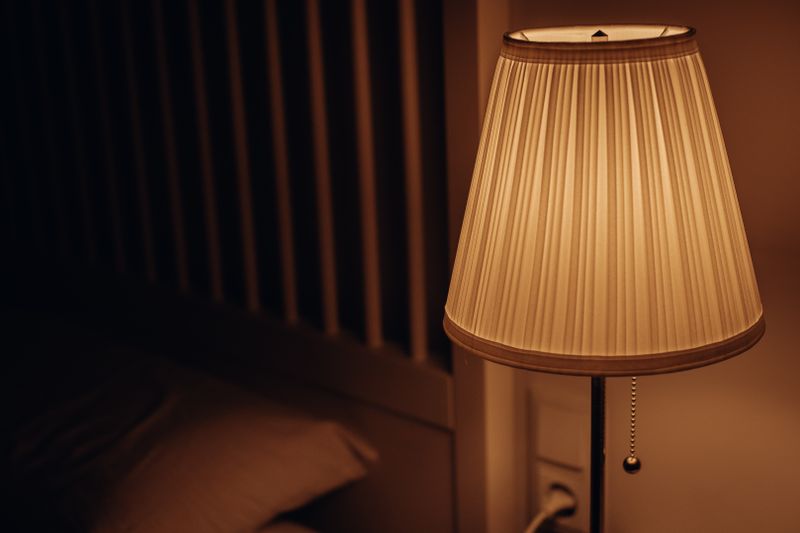
The brightest thing in the room becomes the ceiling fitting itself, and a bright source in the field of view causes glare regardless of the lamp used. Faces read better with light arriving roughly horizontally, which is why table lamps and wall lights flatter and a ceiling rose does not. This is why people instinctively switch on a lamp and turn the main light off when they sit down, without being able to say why.
What it is genuinely good for
General overhead light is useful for circulation, for safety on stairs and thresholds, and for any task where finding things quickly matters. Kitchens, utility rooms and workshops need an even wash that no arrangement of table lamps produces. It is also the right answer for cleaning, which is a real activity that deserves a switch rather than being designed out.
Underneath it, the mistake is not having overhead light; it is having only overhead light, on one switch, at one brightness. Treating it as the cleaning-and-searching layer rather than the main layer resolves most of the argument.
Building the other layers
Several sources at different heights around a room let the eye adapt to a lower overall level while still reading everything comfortably. A room generally feels resolved with light at three rough heights: something near the floor, something at seated eye level and something high.
In practice, wall lights and uplighters bounce light off ceiling and walls, which produces soft general illumination without a bright source in view. A pool of light on a surface, a table, a shelf, a plant, gives the eye a place to rest and makes the dark parts of the room read as intentional.
Because light falls off sharply with distance, two modest lamps close to where people sit outperform one powerful one across the room.
Rewiring, or working around it
Adding wall lights and switched sockets means new cable in walls and ceilings, which is electrical work with rules that differ between countries. In many places that work has to be carried out or certified by a qualified electrician, and it is not a sensible do-it-yourself project. Where rewiring is out of the question, plug-in floor and table lamps on a single switched socket give most of the benefit reversibly.
Renters can achieve a lot with lamps, a plug-in wall fitting hung from a hook and a cable run neatly along a skirting. A ceiling pendant on a long flex, hooked across to hang over a table rather than the middle of the room, is another reversible move.
Where downlights go wrong
Downlights are usually laid out as an even grid across the ceiling, which lights the floor uniformly and the walls hardly at all. A room lit only by a grid feels dim even when it is measurably bright, because the vertical surfaces the eye reads are left dark.
Placing them closer to walls to graze the surface, or aiming them at what should be seen, changes the result completely. Every fitting is also a hole in the ceiling, with consequences for airtightness, sound transfer between floors and insulation above. Those consequences involve fire performance and insulation clearance, so the specification and installation belong to a qualified professional.
Side by side
| Consideration | What it means in practice |
|---|---|
| Why the middle of the ceiling | A single overhead source lights the floor well and faces badly. |
| What overhead light does to a face | Several low-output sources at different heights read as brighter than one bright one. |
| What it is genuinely good for | Downlight grids are laid out for the ceiling plan rather than for what happens below them. |
The takeaway
Keep the overhead light for finding and cleaning, and build the room the eye reads out of lower, softer sources.
The best rooms look like a decision, not a purchase.
Questions readers ask
Why does my room feel gloomy even with a bright ceiling light?
Brightness is read from surfaces, not from the fitting. If the walls are dark and the only source points down, the room reads as dim while the floor is well lit.
What is the cheapest improvement to a badly lit room?
Two or three table and floor lamps placed near where people actually sit, and then using the ceiling light only for cleaning and searching.