Small Spaces
A small flat needs fewer things, better placed
Most small-space advice sells storage. The rooms that work usually contain less, arranged around how the space is used.
This works through small flats in the order the parts actually depend on each other.
The short version
- Circulation space is what makes a small room feel usable.
- Fewer, larger pieces read as calmer than many small ones.
- Vertical storage above eye level is the least intrusive.
Circulation is the scarce resource
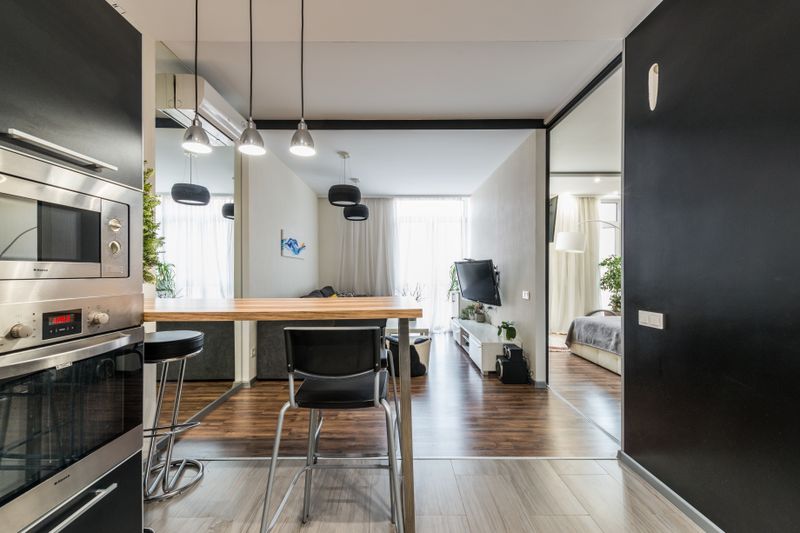
A small room feels cramped when there is nowhere to move, not when there is a lot in it. Protecting clear routes through the space, even at the cost of a piece of furniture, changes how the room reads immediately. The common error is filling every wall, which leaves the middle as a corridor between obstacles.
Measuring the routes you actually walk, and keeping them clear, is more useful than any storage purchase.
Fewer large pieces, not many small ones
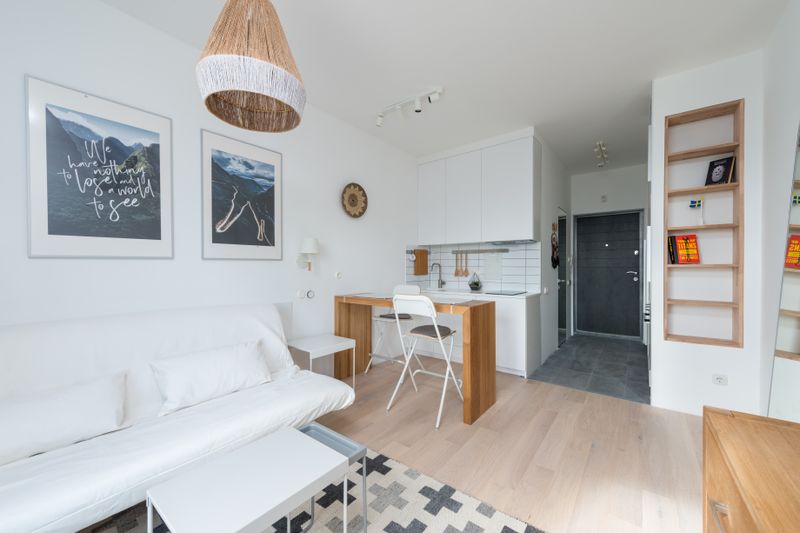
Several small items create visual noise and edges, which makes a room feel busier and therefore smaller. One properly sized sofa reads calmer than two chairs and a footstool occupying the same area.
Over years, this runs against the instinct to buy small furniture for small rooms, and the instinct is usually wrong. What a piece stands on decides how heavy it reads: a sofa on visible legs lets the floor run underneath and the room keeps its full measured length, whereas the identical sofa on a solid plinth cuts the floor in two.
Go above eye level
Storage above head height is out of the visual field and does not make a room feel fuller. A high shelf running around a room holds a surprising amount and reads as architecture rather than as clutter. Below waist height, drawers beat cupboards because you can reach the back.
The limit is honest access, since anything above shoulder height is retrieved with a stool and can therefore only hold what is wanted a few times a year, and a high shelf loaded with weekly items becomes a reason to leave them on the floor instead.
Multi-use furniture rarely earns its complexity
Sofa beds, extending tables and lift-up storage all involve a daily action, and daily actions get skipped. They work where the transformation is genuinely occasional and fail where it is meant to happen every night. A simple item that does one thing well is usually the better purchase.
Room to room, the transformations that do survive share a shape — one movement, nothing to unpack first, and no bedding or cushions to store elsewhere — which is why a folding table stays in use for years and a bed requiring the duvet to be relocated nightly does not.
Renting changes the toolkit
Freestanding, removable and reversible interventions are the ones available, which rules out most built-in solutions. Tension rods, freestanding shelving, plug-in lighting and rugs do a great deal without touching the fabric. Buying pieces that will work in an unknown next flat is a real constraint and worth designing around.
Reversible is not the same as harmless, since adhesive hooks and peel-off wallpaper routinely take the paint surface with them on removal and fail worse on damp or freshly painted walls, so it is worth testing one in a hidden corner before committing a whole wall to them.
Taste is not the argument here; how a room performs is.
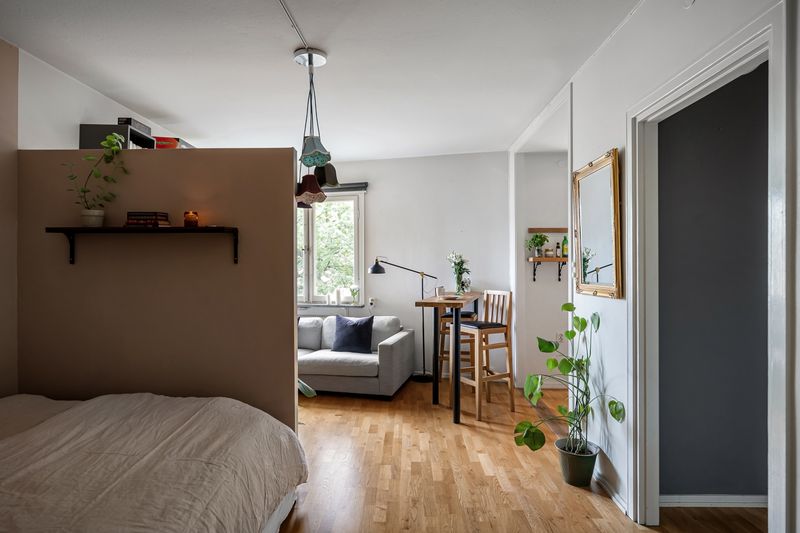
One room doing three jobs needs a boundary, not a divider
A room that is an office by day and a bedroom at night fails mainly because the work stays visible at exactly the point you want to stop thinking about it. The cheapest boundaries are light and sightline rather than furniture: a task lamp that goes off, a cupboard door that closes over the desk, or the desk placed so it is behind you from the bed.
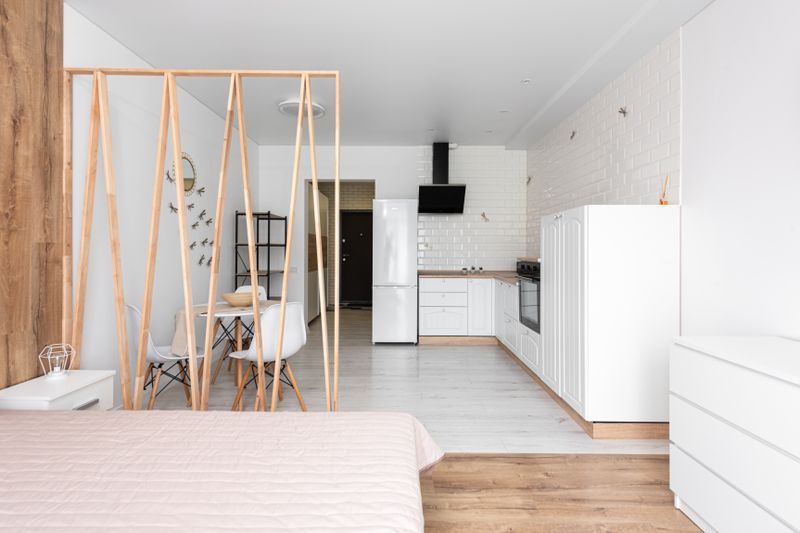
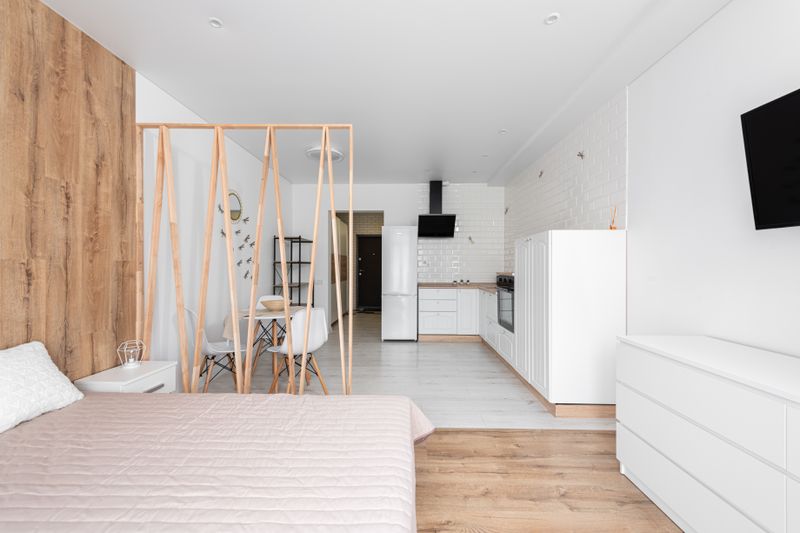
Physical dividers such as screens, shelving units and curtains cost floor area and block light, so they earn their place where two people use the room simultaneously and rarely where one person uses it at different hours. Smell and sound cross a boundary that furniture does not, which is why cooking in a studio reaches the bedding whatever the layout, and why extraction and an opening window matter more here than any arrangement of the furniture.
The takeaway
Take something out and keep the routes clear. That is most of small-space design.
A room that is used will always beat a room that is finished.
Questions readers ask
Do mirrors really make a room look bigger?
They extend sightlines and bounce light, which helps. Positioning matters — a mirror reflecting a wall does nothing; one reflecting a window or a long view does.
Should I use light colours in a small room?
Not necessarily. Dark colours blur the edges of a room and can make it feel less defined and more enveloping, which many small rooms benefit from.