Small Spaces
Ceiling height changes what a small room can take
A three-metre room and a two-metre-forty room of the same floor area are not the same room, and they need opposite decisions.
This works through ceiling height in the order the parts actually depend on each other.
The short version
- Volume, not floor area, determines how enclosed a room feels.
- High rooms tolerate large furniture and strong colour that low rooms do not.
- Low rooms benefit from low furniture and light on the ceiling.
Proportion is what you actually perceive
A room is experienced as a volume, so a tall narrow room and a low wide room of the same area feel entirely different to stand in. A tall small room feels generous and slightly formal; a low small room feels enclosed and, done well, sheltering. Neither is a defect, and the mistake is treating them the same because the plan looks identical.
The furniture, the colour and the lighting all need to respond to the height rather than to the footprint.
Low rooms want low furniture
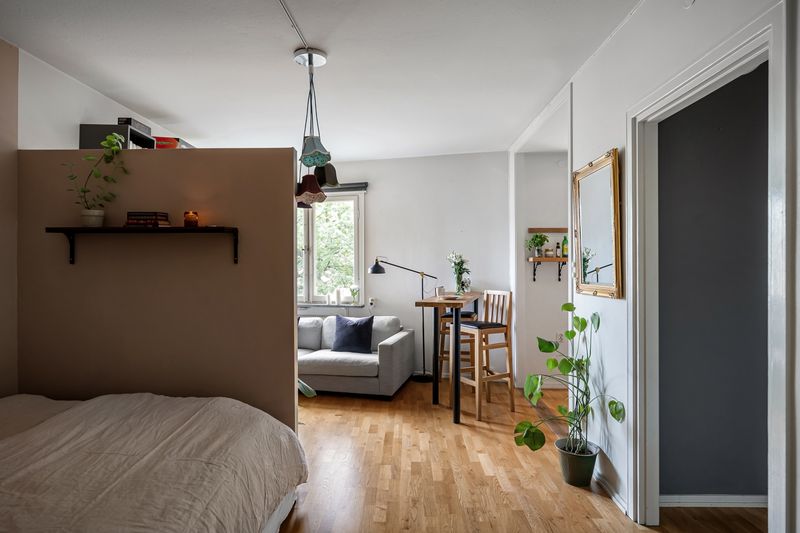
In a room with a two-metre-forty ceiling, a tall wardrobe or a high-backed sofa eats the visible wall and makes the ceiling feel closer. Lower-profile seating, low storage and a horizontal emphasis all leave more wall above the furniture, which reads as more air. Wall lights and uplighters that put light on the ceiling raise it visually, while downlights emphasise how close it is.
In practice, full-height joinery painted the same colour as the wall is the exception, because it disappears rather than competing.
High rooms need something at eye level
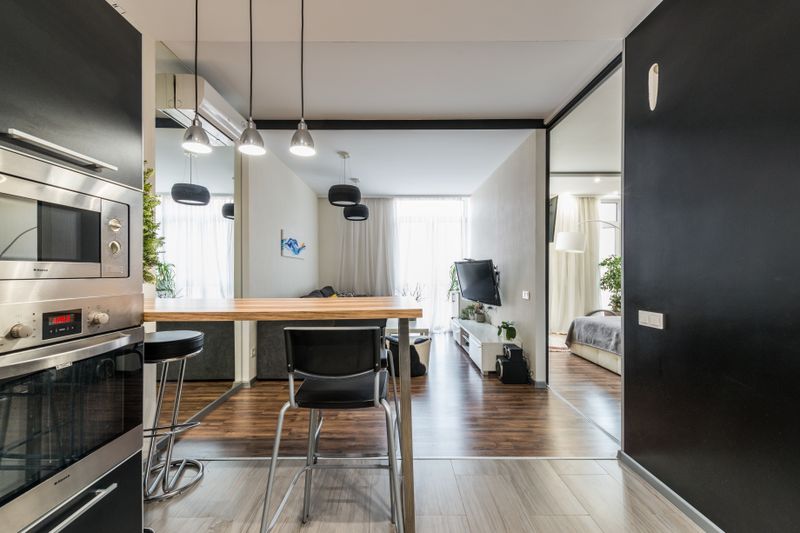
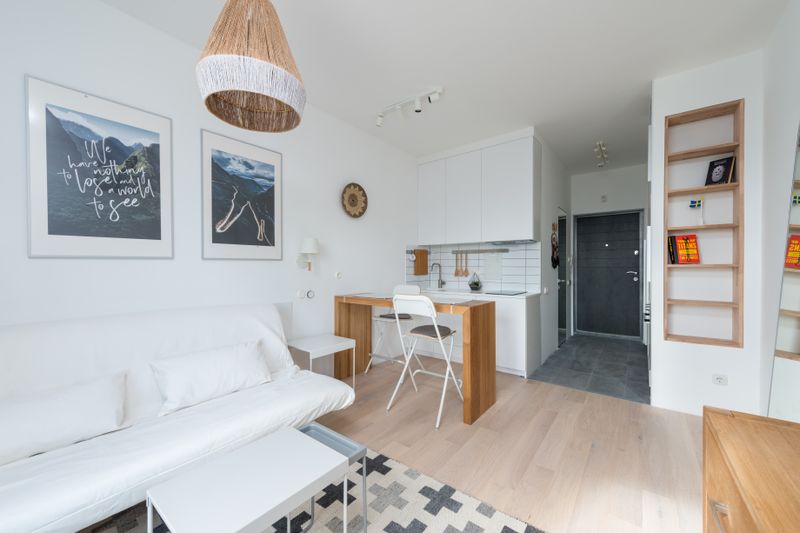
A tall room with everything low in it feels like a warehouse, because there is nothing in the middle of the volume. Tall bookcases, large artwork, high curtains and pendants hung down into the room populate the height and make the space read as designed.
Live with it a while and a picture rail, a deep cornice or a colour change part-way up the wall breaks the height into proportions the eye can read. Painting the ceiling and the upper wall a darker colour lowers a very tall room deliberately, which is a legitimate way to make it cosier.
Roof slopes are their own problem
A room in a roof has a usable zone where you can stand and a low zone where you cannot, and the plan has to follow that rather than the floor outline. Beds, seating, storage and desks all work in the low zone; circulation and doorways do not. Building regulations in many countries set minimum head heights for habitable rooms and for stairs, and these differ, so check locally before converting.
A window in the slope brings daylight into the deep part of the room, which is what makes a loft room habitable rather than a corridor of standing space.
Doors, skirtings and the visual grammar
Tall skirtings and deep cornices in a low room consume the wall and shorten it further, which is why they belong in high-ceilinged houses. A door that runs close to full height makes a low room feel taller, and a standard door under a high ceiling leaves an awkward band above it. Painting trim the same colour as the wall removes the horizontal lines that cut a low room into bands.
Live with it a while and these are cheap decisions at decorating stage and expensive ones afterwards.
What you can actually change
Ceiling height is rarely alterable, though removing a suspended ceiling or opening into a roof void occasionally reveals more than expected. Anything involving joists, roof structure or a floor above is structural work requiring a qualified engineer and, usually, approval.
Lowering a ceiling is far easier than raising one and is sometimes the right answer in a room that feels lost in its height. For most people the useful move is to work with the proportion rather than to fight it, which costs nothing.
The takeaway
Match the furniture height to the ceiling, put light on the ceiling in low rooms, and fill the middle of the volume in tall ones.
Buy slowly. The gaps are not a problem.
Questions readers ask
Does painting a ceiling white make it look higher?
A lighter ceiling recedes slightly, and light bounced up onto it does more. Continuing the wall colour onto the ceiling can also blur where the wall ends, which reads as taller.
Can I hang a pendant in a low room?
Yes, over a table or in a corner where nobody walks. A flush or semi-flush fitting is better in circulation areas, where head clearance is the constraint.