Small Spaces
Drying laundry indoors is a moisture problem before it is a space problem
A load of wet washing releases litres of water into the air of a flat. Where that water ends up is what decides whether you get mould in a corner.
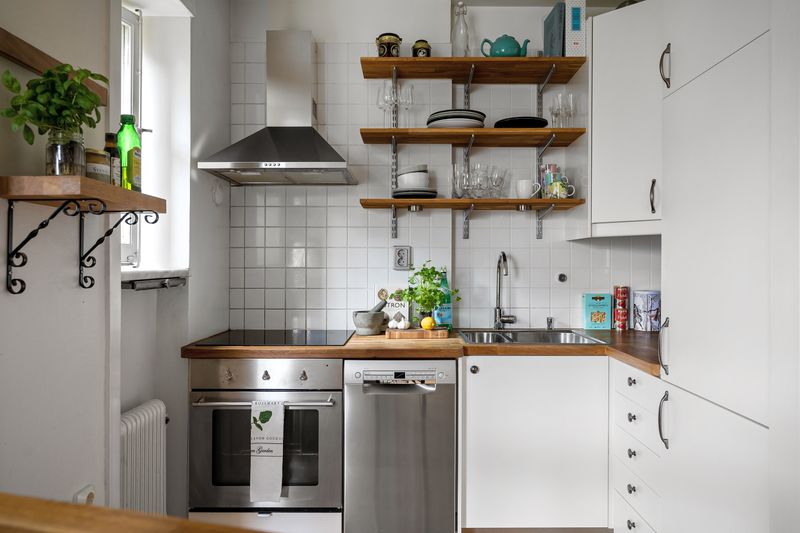
This is written to be used rather than admired. Each section below is a decision about indoor drying and humidity, and each one has a default.
Before you start
- Wet washing releases most of its remaining water into the room air as it dries.
- Moisture condenses on the coldest surface in the home, which is rarely the room it started in.
- Ventilation removes moisture; heating alone only relocates it.
Where the water goes
Clothes leaving a washing machine still hold a significant weight of water, and drying indoors puts almost all of it into the air. Air can only hold a certain amount of water vapour at a given temperature, and warmer air holds more than cold air. When that air meets a cold surface it cools, its capacity falls and the excess condenses as liquid water on the surface.
The cold surface is usually a window, an external corner, a cold wall behind furniture or an unheated bedroom. This is why drying clothes in a warm living room can produce mould in a bedroom two doors away.
Why mould follows
Mould needs moisture, a surface and time, and it will grow on almost any surface where relative humidity stays high enough for long enough. It appears first in the places where air does not move, behind wardrobes, in corners and behind curtains at cold windows.
Wiping it away without changing the moisture balance simply resets the clock, since the conditions that produced it are unchanged. Persistent mould in a home can be a health concern for some people, particularly those with respiratory conditions, and advice on this varies. Distinguishing condensation mould from rising or penetrating damp matters, because the remedies are entirely different and one is a building fault.
Ventilation is what actually removes it
Moisture leaves a home only when the moist air itself leaves, so opening a window for a short period moves more water out than hours of heating. Short sharp ventilation, opening wide for a brief period, exchanges the air without cooling the fabric of the building substantially. A mechanical extract fan in the room where the drying happens removes moisture at source, which is the most efficient approach.
Over years, trickle vents and background ventilation exist for exactly this reason, and taping them shut in winter causes the problem that follows. Continuous mechanical ventilation systems in newer homes are designed to handle this load and should not be switched off to save energy.
Where to dry, if you must dry indoors
Concentrating the drying in one room with the door closed and a window open contains the moisture instead of spreading it. A bathroom with an extract fan is often the best room available, since it is designed to deal with moisture. Drying in a bedroom is the worst common choice, because the room is unheated at night and the occupants add more moisture while they sleep.
The quieter point is that spacing garments out shortens drying time considerably, and shorter drying reduces how long the humidity stays elevated.
A high spin speed in the machine removes more water mechanically, which reduces the amount that has to evaporate into the room.
Dehumidifiers and what they do
A dehumidifier condenses moisture out of the air and collects it, which removes water without needing to exchange air with outside. It works well in a closed room with drying laundry and is usually more effective there than in a whole open-plan flat.
Different types perform differently at low temperatures, and an unheated room in winter is a demanding condition for some of them. They generate a little heat as they run, which helps drying, and they use electricity, which is a running cost. A dehumidifier is a management tool rather than a cure where the underlying problem is a building defect or a lack of ventilation.
Heated airers and the sealed-cupboard trap
Gentle heat speeds evaporation, which shortens the drying time but does not change the total amount of water released. Covering a heated airer traps warm moist air and speeds drying further, provided that moist air is then vented rather than released into the room. A sealed cupboard with wet washing in it is the classic way to produce mould on the clothes themselves.
Over years, any drying arrangement in an enclosed space needs an air path in and an air path out, or it becomes a damp box. Where a vented tumble dryer is used, its duct must discharge outside, and venting one into a room adds the entire moisture load back.
The takeaway
Dry in one room with the door shut and a way for the moist air to leave, and spin the water out before it becomes an air problem.
The best rooms look like a decision, not a purchase.
Questions readers ask
Does drying clothes on a radiator cause damp?
It adds the same amount of water to the air as any indoor drying, and the warmth helps it spread. The damp appears wherever the coldest surface in the home is.
Is a dehumidifier better than opening a window?
In cold weather it can be, because it removes moisture without losing heat. Opening a window briefly and widely is free and works quickly, so most homes benefit from both.