Small Spaces
Two people in one room fails on timing, not square metres
Shared small spaces break down over when things happen and where things are left, long before they run out of area.
Most explanations of sharing a small home stop at the point where it starts to matter. This one carries on.
The short version
- Conflicting schedules in one room cause more friction than lack of space.
- Separate storage for personal items reduces most daily disputes.
- A single place to be alone is worth more than extra floor area.
The complaint is usually about time
Two people in a one-bedroom flat rarely run out of physical room; they run out of the ability to do different things at the same time. One person on a call and one cooking, or one going to bed and one watching something, are the situations that generate friction. That is a scheduling problem, and it is solved by agreement more effectively than by furniture.
Households that name this explicitly tend to cope far better than ones that conclude the flat is too small.
Separate territory beats shared territory
Giving each person their own storage, their own surface and their own chair removes most of the recurring disputes about where things are left. Shared space works when it is genuinely shared and fails when one person's belongings are colonising it. This can be very small — a shelf, a drawer, a hook, a side of the bed — and the psychological effect is out of proportion to the volume.
In practice, a defined place for each person's daily carry, keys, headphones and bag prevents the largest single source of surface clutter.
One place to be alone
Even a corner with a chair, a light and a different orientation functions as somewhere to withdraw, and it changes how a small flat feels. A bedroom is the usual candidate, which is why a bedroom used as a dumping ground removes the only retreat in the home. Where the flat genuinely has one room, headphones, a screen and an agreed convention about not interrupting do a partial version of it.
Over years, time alone in the flat, by agreement, is the version that costs nothing and works best.
Sound between activities
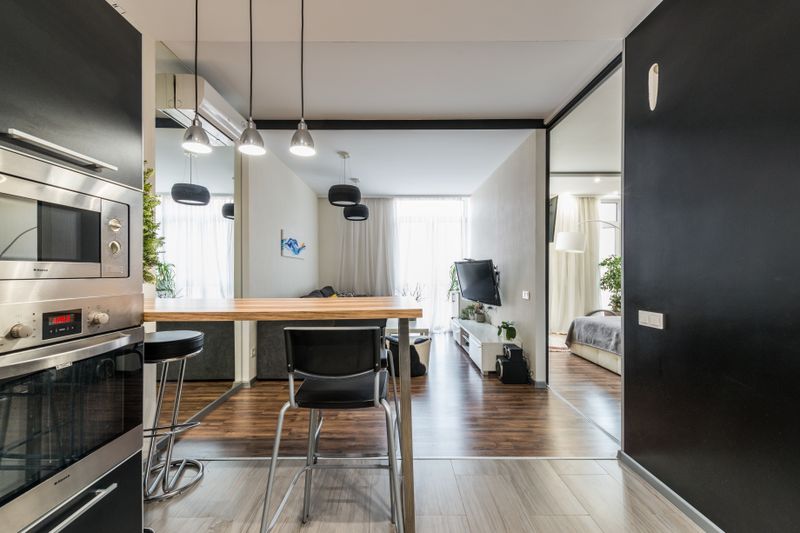
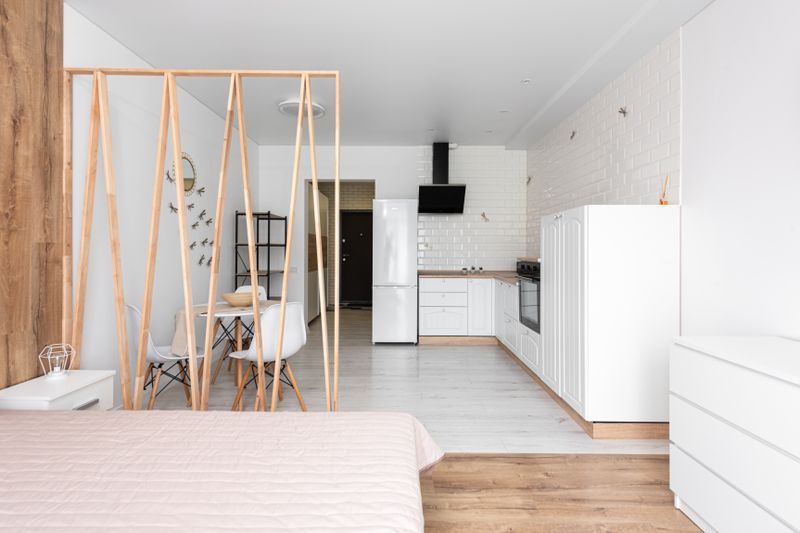
The main practical intervention in a shared small home is reducing sound transfer between the two zones people occupy. A closable door somewhere is worth a great deal, and a heavy curtain across an opening is a cheap approximation. Soft furnishings shorten reverberation so that two activities in one room interfere less.
Positioning the working corner away from the kitchen, rather than next to it, removes the most common clash.
Storage capacity has to be honest
Two people accumulate roughly twice as much as one, and most one-bedroom flats are built with storage for something less than one. The realistic answers are a full-height run of closed storage, ruthless reduction, or paying for storage elsewhere. Pretending the capacity exists produces a flat where everything is visible, which is what makes small shared homes feel oppressive.
In practice, deciding together what leaves is a harder conversation than buying another unit and a much more effective one.
Guests and the outside world
The ability to have someone over is often what people miss most in a small shared flat, and it is worth designing for. Folding chairs, a table that extends, and a floor plan that can be rearranged in ten minutes make it possible.
Somewhere for a guest's coat and bag to go stops the entrance filling up. Being able to host, even modestly, changes how a small home feels to live in more than an extra square metre would.
The takeaway
Agree the timetable, give each person their own shelf and chair, and protect one place to be alone.
Buy slowly. The gaps are not a problem.
Questions readers ask
How do two people work from home in a one-bedroom flat?
Agree who takes calls where and when, set up a second minimal working position, and use headsets. It is a timetable problem more than a furniture problem.
What is the most useful change in a shared small flat?
A door or curtain that can separate two zones, and defined personal storage for each person. Both cost little and remove most of the daily friction.