Light
Halogen Dimmed Warm And LED Does Not Unless It Is Built To
Old bulbs got warmer and softer as they dimmed because dimming cooled the filament, while an LED simply gets dimmer at the same color unless its driver imitates that shift.

Turning down a halogen lamp made the light warmer as well as weaker, which is why low light in a room used to feel like candlelight. An LED on the same dimmer usually goes dim without going warm, and the reason is physical rather than a defect.
The old bulb changed color because it changed temperature
An incandescent or halogen bulb makes light by heating a metal filament until it glows. The color of that glow is set by how hot the filament is, in the same way a hot coal shifts from orange to white.
Dimming reduces the power reaching the filament, so it runs cooler and its light slides toward orange. Brightness and color moved together because they were two readings of one process.
Nobody designed that behavior. It came free with the way the bulb worked, and a century of interiors quietly assumed it.
An LED makes color a fixed property
An LED produces light in a semiconductor junction and then, in most household bulbs, converts part of it with a phosphor coating. The mix of the blue chip and the phosphor is what sets the white you see.
That mix does not change when the bulb is driven at lower current. Reducing the output pulls the brightness down while the color stays roughly where the manufacturer set it.
So a room dimmed with LEDs can feel underlit rather than intimate. The light is scarce, but it is still the same daytime white it was at full output.
Warm-dim bulbs imitate the effect deliberately
Manufacturers now build bulbs with two sets of emitters, one warmer and one cooler, blended by the driver. As the dimming signal falls, the driver shifts the balance toward the warmer set.
The result tracks the old filament curve closely enough that most people never question it. It costs more, because the electronics are doing work the physics used to do for free.
These are usually labeled as dim-to-warm rather than simply dimmable, and the two words mean different things on a box.
Compatibility is a separate question from color
A dimmer built for resistive filament loads is reading a circuit that no longer behaves the way it expects. LED drivers draw current in short pulses, and an old dimmer can respond with buzzing, flicker or a dead band at the bottom.
Bulb makers publish compatibility lists naming which dimmers they have tested against. Checking that list is more useful than assuming any bulb marked dimmable will behave on any switch.
Mixing brands on one circuit compounds the problem, because each driver reaches its lowest usable point at a different place.
What this changes about buying lamps
If a room is meant to soften in the evening, the softening now has to be purchased. Either the bulbs shift warm on their own, or the room needs several fixtures at different color temperatures switched separately.
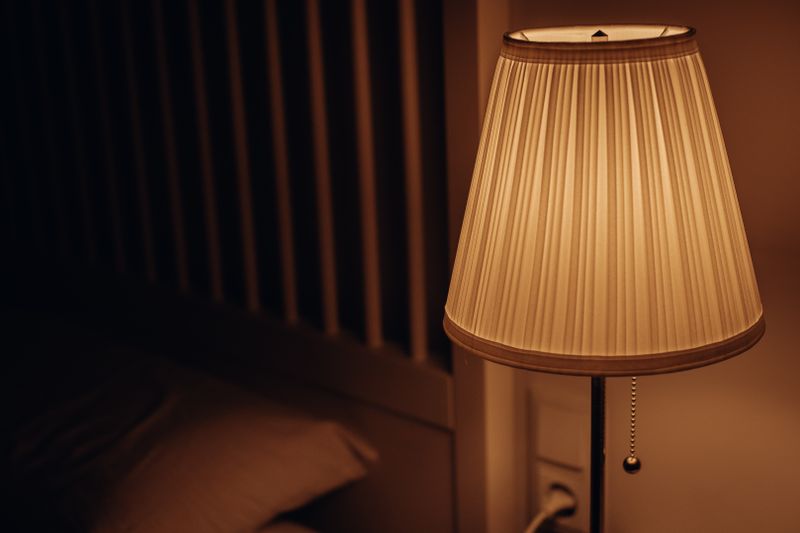
Table lamps carrying the evening load can hold warmer bulbs than the ceiling fixture, which gives a similar effect through layout rather than electronics.
That is the practical trade: pay for warm-dim hardware, or plan the circuits so the warm sources are the ones still on late.
Questions readers ask
Where should I hang a mirror to brighten a dark room?
On a wall adjacent to the window rather than opposite it, so it catches daylight at an angle and pushes it into the room instead of returning it to the glass.
Do mirrors really make a room look bigger?
They add apparent depth by reflecting space the eye reads as continuing. That only works if what they reflect is space rather than a blank wall.