Light
Where a window sits in the wall matters as much as how big it is
Two windows of identical area can light a room completely differently. Height, depth in the reveal and distance from a corner change how far the daylight travels.
Everything here earned its place by changing an outcome. Nothing about window position is included to round the number up.
What matters most
- The head height of a window governs how deep into a room daylight reaches.
- A window near a corner washes the adjacent wall and spreads light further.
- Deep reveals cut glare by giving the eye an intermediate brightness.
Daylight comes from the sky, not the view
Most of the light entering a room on an overcast day comes from the sky rather than from the ground or from surrounding buildings. That is why the upper part of a window contributes far more daylight than the lower part, which mostly delivers the view.
Raising the head of a window therefore pushes light deeper into the room, while lowering the sill mainly adds outlook. A tall narrow window commonly lights a room better than a wide low one of the same area, which is counterintuitive until you see it. Rooms with high ceilings gain most from this, since there is room to place glass where the sky is visible from far inside.
Distance from a corner changes everything
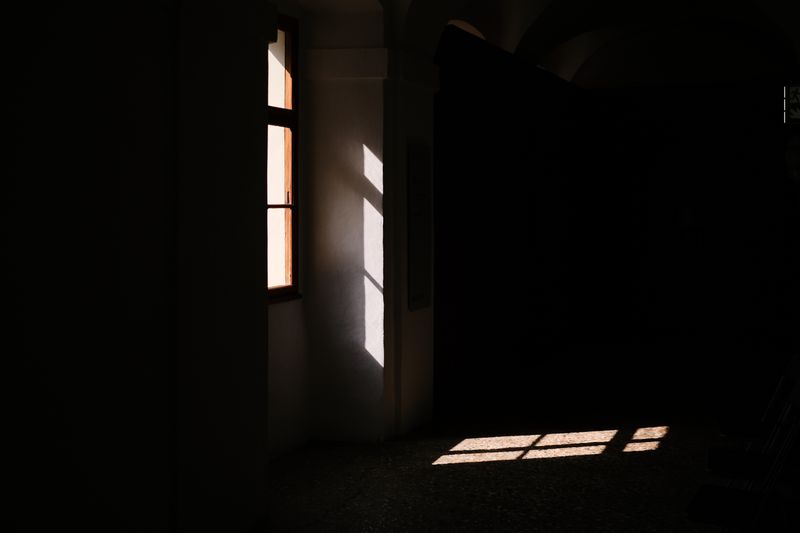
A window set close to a side wall throws light along that wall, and the lit surface becomes a secondary source for the whole room. A window centred in a wall leaves both corners dark, and the room reads as a bright middle with shadowed ends. Washing a wall with daylight also reveals its texture, which is why the same plaster looks alive in one room and flat in another.
Two smaller windows on different walls give light from two directions, which softens shadows and makes faces read better. Corner windows are the strongest version of this and are structurally demanding, which is why they are rarer than they deserve to be.
Reveals, depth and glare
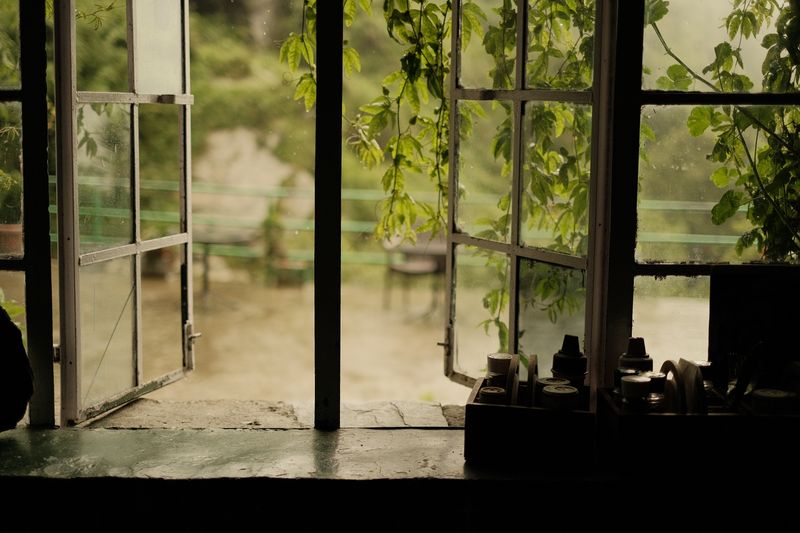
A window in a thick wall has a deep reveal, and the splayed surface catches light and gives the eye a step between bright glass and dark wall. Without that step, the contrast between a bright window and a dim wall is what the eye reads as glare.
Painting the reveal a pale colour increases the effect, and it costs nothing during ordinary decorating. Splaying a reveal outward, which older buildings often did, widens the angle of sky visible from inside the room. A shallow reveal in a modern wall gives a sharper transition, which is why blinds and curtains do more work in newer houses.
What is outside the window
Light bouncing off a pale wall, a light-coloured terrace or water outside enters the room as usable indirect light. A dark fence or dense planting close to the glass absorbs that light and reduces the effective brightness of the window considerably. Trees change the situation seasonally, which is why a room that is bright in winter can feel dim by midsummer.
The quieter point is that neighbouring buildings cut off part of the visible sky, and the higher they are relative to the window the more daylight is lost. Cleaning glass and cutting back growth immediately outside are the cheapest daylight improvements available to anyone.
Ceiling, floor and the surfaces light lands on
Daylight entering a room bounces before it reaches most of the surfaces you see, so pale ceilings extend its reach. A dark floor absorbs a large proportion of what arrives, which is why a room with dark boards needs more light than its window area suggests.
Underneath it, the wall opposite a window is the one that does most of the redistributing, so its finish matters more than any other. Matt surfaces spread light evenly while gloss reflects it in a single direction and creates hot spots and glare. None of this replaces a badly placed window, but it can recover a surprising amount of a poorly lit room.
Changing a window in an existing house
Enlarging or moving an opening in a load-bearing wall requires a lintel and a structural assessment, which is work for a qualified professional. Rules on window sizes, escape openings, safety glazing and how close a window may be to a boundary vary substantially by country. Protected and historic buildings usually have additional restrictions, and altering a window can require consent even when the wall is not structural.
Over years, where the opening cannot change, adding a rooflight or borrowing light through an internal glazed panel are the usual alternatives. Raising a window head within an existing opening is sometimes possible and delivers more daylight than widening the same window would.
Everything above, in order of what to do first
- Daylight comes from the sky, not the view. Most of the light entering a room on an overcast day comes from the sky rather than from the ground or from surrounding buildings.
- Distance from a corner changes everything. A window set close to a side wall throws light along that wall, and the lit surface becomes a secondary source for the whole room.
- Reveals, depth and glare. A window in a thick wall has a deep reveal, and the splayed surface catches light and gives the eye a step between bright glass and dark wall.
- What is outside the window. Light bouncing off a pale wall, a light-coloured terrace or water outside enters the room as usable indirect light.
- Ceiling, floor and the surfaces light lands on. Daylight entering a room bounces before it reaches most of the surfaces you see, so pale ceilings extend its reach.
- Changing a window in an existing house. Enlarging or moving an opening in a load-bearing wall requires a lintel and a structural assessment, which is work for a qualified professional.
The takeaway
Get the glass high and near a corner, keep the reveal pale, and clear whatever is blocking the sky outside.
The best rooms look like a decision, not a purchase.
Questions readers ask
Would a bigger window fix my dark room?
Often a taller one would do more than a wider one, because daylight comes mainly from the sky. Raising the head of the opening pushes light further into the room.
Why is my room dark despite a large window?
Look at what is outside it, how high the head is, and what the floor and opposite wall are doing with the light once it arrives.