Light
The Sun's Angle Changes With The Season And So Does The Room
The sun climbs higher in summer and stays low in winter, which changes how deep daylight reaches indoors, how far shadows fall, and how much heat comes with the light.

A room that is filled with light in January can be surprisingly dim at midday in July, with nothing about the windows having changed. The difference is the height of the sun rather than its brightness.
Altitude, not distance, drives the change
Over the course of a year the sun's path across the sky rises and falls, sitting high overhead near midsummer and low near midwinter. The swing is wider the farther north the house sits.
A high sun sends light down at a steep angle, so it enters a vertical window shallowly and lands close to the wall below it. A low sun sends light in almost horizontally and drives it deep into the room.
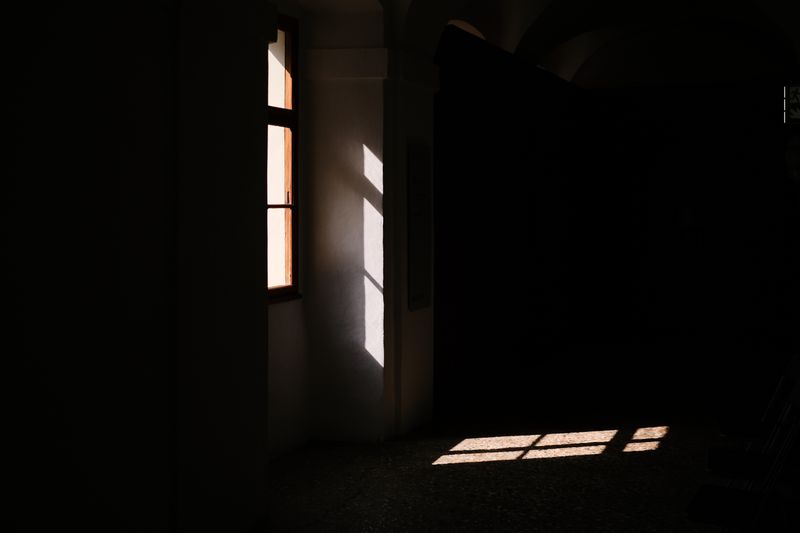
This is why winter afternoons can throw a patch of sunlight onto the far wall of a room that never sees one in August.
Overhangs act as seasonal filters
Porches, deep eaves and balconies above a window cut off high-angle light while leaving low-angle light untouched. A projection that shades a south-facing window in summer often does nothing in December.
That behavior is not accidental in older houses. Generous eaves on the sunny side were a normal way of keeping rooms cool before mechanical cooling existed.
The same geometry works against a room that wants summer sun, which is one reason a covered porch can leave the room behind it permanently dark.
Orientation decides which season is difficult
A south-facing room takes the most seasonal variation, bright and deep in winter, shaded and even in summer. North-facing rooms see comparatively steady indirect light all year.
East and west windows receive the sun when it is low, morning and evening, in every season. Those are the windows that produce long horizontal beams and the glare people feel on a screen.
Judging a room's light from one visit is therefore unreliable, especially for a house seen once in a particular month.
Heat arrives with the light
Sunlight entering a window carries energy that is absorbed by floors and furniture and released as warmth. The low winter beam that reaches deep into a room is also heating it.
West-facing glass is the usual source of late-afternoon overheating in summer, because the sun is low, direct and shining at the end of a day that has already warmed the house.
Shading on the outside of the glass stops that energy before it enters, which is why exterior shutters and awnings outperform interior blinds at the same job.
Planning around a moving source
Knowing which way windows face, and watching a room across several months, tells more about how to light it than any measurement taken on one afternoon.
Rooms used mainly in the morning benefit from an eastern aspect, and a room used after work is easier to enjoy without a low western sun in it.
Where the aspect cannot be changed, the response is control at the glass and lamps positioned for the hours when daylight has left the room entirely.
Questions readers ask
Where should I hang a mirror to brighten a dark room?
On a wall adjacent to the window rather than opposite it, so it catches daylight at an angle and pushes it into the room instead of returning it to the glass.
Do mirrors really make a room look bigger?
They add apparent depth by reflecting space the eye reads as continuing. That only works if what they reflect is space rather than a blank wall.