Small Spaces
The top third of a small room is usually wasted
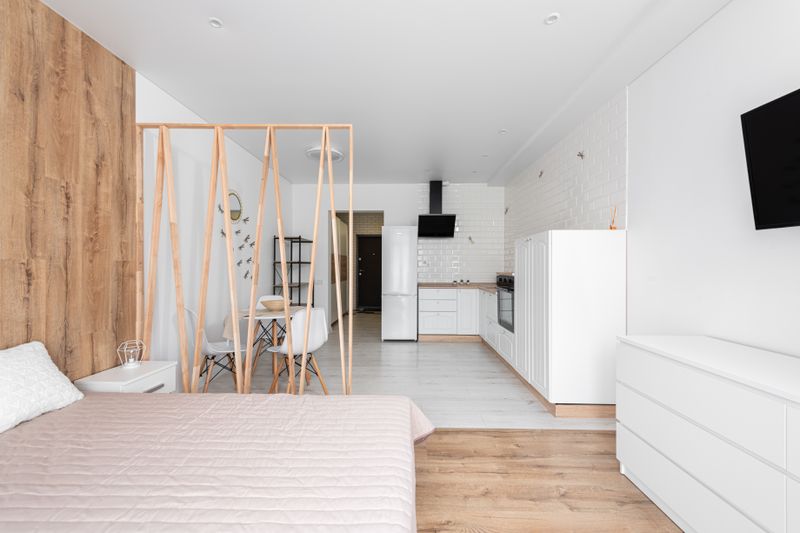
Floor area gets measured, argued over and paid for. The volume above head height is free, unused and capable of absorbing most of what is cluttering the floor.
The options around vertical storage are set out side by side below, with the conditions that genuinely favour one over the other.
The difference in one place
- Storage above door height is invisible from normal sightlines and does not crowd a room.
- Anything stored above shoulder height should be light and infrequently needed.
- A shelf running at picture-rail height circles a room without blocking any furniture.
The volume nobody counts
Rooms are described by their floor dimensions, so the band between head height and ceiling is never part of how a space is valued. That band is continuous around the whole room and is interrupted only by windows and door openings.
Because it sits above the normal sightline, storage placed there registers far less than the same volume at eye level. It is also the part of the room least useful for anything else, since nobody walks, sits or works there. A small home with full floor-to-ceiling storage on one wall usually feels less cluttered than one with low units around three walls.
A shelf at high level
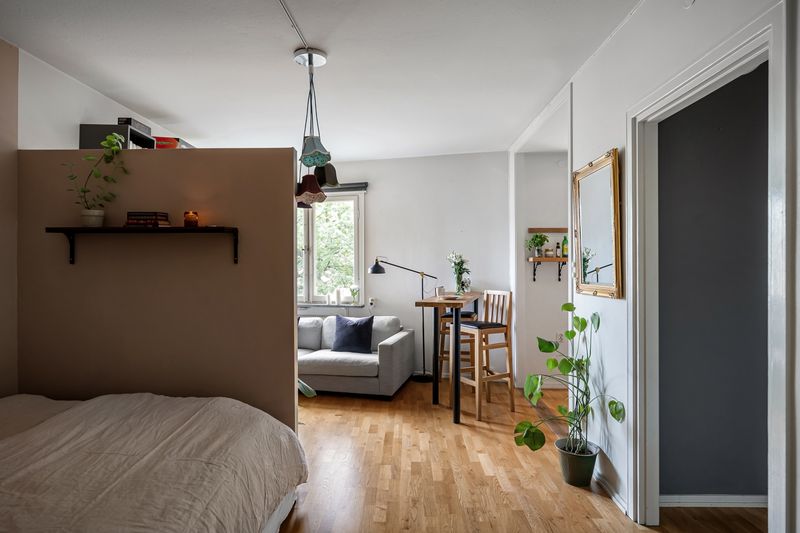
A single shelf running around a room at door-head height carries books, baskets and objects without touching the usable part of the wall. It reads as a horizontal line rather than as furniture, which is why it often makes a room feel more resolved rather than fuller.
Over years, carrying that shelf across a window reveal or above a door keeps the line continuous and reinforces the effect. Because it is high, what sits on it is seen from below, so the fronts of objects matter more than their tops. Load is the limiting factor, and a shelf carrying books needs fixings into structure and support at intervals that resist sag.
Over doors and in corners
The space above a door is a natural cupboard, deep enough for a shallow unit and completely out of the way. Corners at high level are awkward for floor furniture and simple for a triangular shelf or a corner cupboard.
Underneath it, the space above a stair, where the ceiling steps up, is frequently a large unused volume with easy access from the landing. Wardrobe tops are the most commonly wasted volume in a bedroom, and boxing them in to the ceiling converts them into usable storage. In each case the storage takes what was already dead space, so nothing is lost in exchange.
What belongs up there
Weight is the first filter: anything heavy overhead is a hazard when it is lifted down and a bigger one if a fixing fails. Frequency is the second: things needed weekly should stay in the reachable band, and things needed twice a year can go high. Bulky and light is the ideal combination, which describes bedding, seasonal clothing, luggage and empty containers.
Underneath it, anything sensitive to heat should not go at high level in a heated room, since warm air collects there.
Labelling matters more up high than anywhere else, because you cannot see the contents of a box from below.
Getting to it safely
A place to store something high is only useful if there is a stable way to reach it that is available in the room. A proper step stool that lives nearby is what determines whether high storage gets used or quietly abandoned. Standing on chairs and on the edges of baths is how most household falls from height happen, and it is entirely avoidable.
Room to room, pull-down rails and mechanisms bring high hanging storage within reach, though they consume some of the depth they serve. For anyone with balance or mobility limitations, high storage should be reserved for genuinely rare items or avoided entirely.
What photographs well and what lives well are frequently different rooms.
Making it look intentional
High storage reads best when it is either fully built in to the ceiling or clearly a shelf, rather than a freestanding unit stopping short. The gap on top of a tall cupboard collects dust and looks unfinished, and closing it with a filler panel resolves both. Painting built-in storage the same colour as the walls makes it recede, which is what keeps a small room calm.
Uniform boxes and baskets on an open high shelf turn a jumble into a texture, which is the difference between storage and clutter. Leaving some of the high band empty stops the room feeling lidded, and it gives the eye somewhere to rest.
Side by side
| Consideration | What it means in practice |
|---|---|
| The volume nobody counts | Storage above door height is invisible from normal sightlines and does not crowd a room. |
| A shelf at high level | Anything stored above shoulder height should be light and infrequently needed. |
| Over doors and in corners | A shelf running at picture-rail height circles a room without blocking any furniture. |
The takeaway
Move the light, bulky, rarely used things above head height, and keep a step stool in the room so it actually happens.
Buy slowly. The gaps are not a problem.
Questions readers ask
Is storage near the ceiling actually usable?
Yes, for light, bulky, rarely needed things, provided there is a stable step stool kept nearby. Without the stool it stops being used within weeks.
Does high storage make a room feel smaller?
Less than low storage does, because it sits above the normal sightline. Painting it the same colour as the walls makes it recede further.