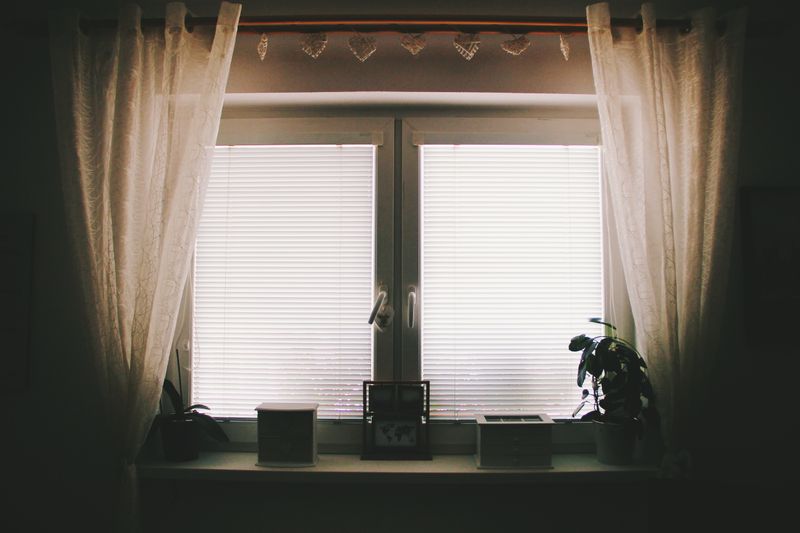
Light
How bright a room is depends on its surfaces, not just its lights
Two rooms with identical lighting can differ enormously in how bright they feel, because most of the light you see has bounced.
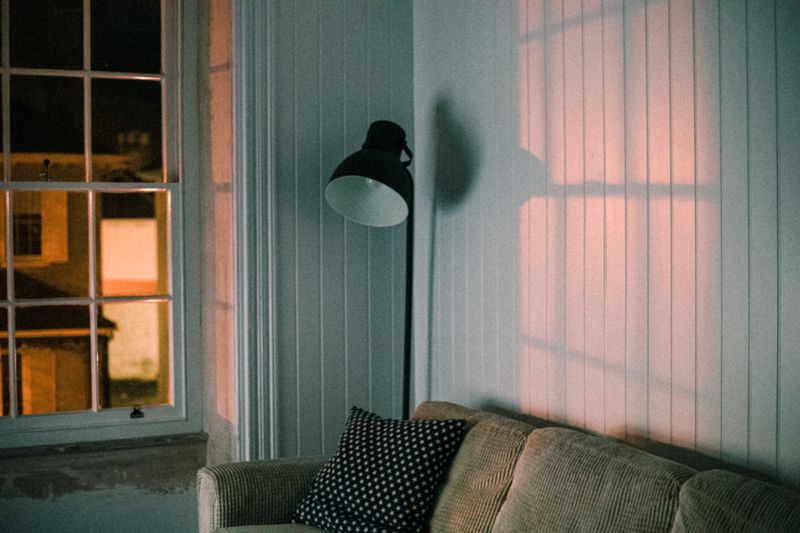
What follows is an argument about surface reflectance, and about where the received version of it stops being true.
The argument in brief
- Light reflectance value describes how much light a colour returns.
- Ceilings do most of the redistributing in a lit room.
- Dark rooms need more light sources rather than brighter ones.
Most of the light you see is second-hand
Light leaves a lamp, hits walls, ceiling and floor, and much of what reaches your eye has bounced at least once. That means the reflectance of the surfaces determines how much of the emitted light is still available after those bounces.
A room finished in dark matt colours absorbs a large share on the first bounce, so it needs substantially more output for the same perceived brightness. This is not an argument against dark rooms; it is an argument for lighting them differently.
Light reflectance value is a published number
Paint manufacturers commonly publish a light reflectance value, running from near zero for black to near a hundred for the brightest white. It is a genuinely useful figure for comparing two colours that look similar on a card but behave differently on a wall. It also matters for accessibility, since contrast between a wall and a door frame or a handrail is what makes them visible to people with limited sight.
A high-contrast skirting, door frame or light switch is a small decision with real practical value in a home used by an older person.
The ceiling does the most work
A ceiling is a large, unobstructed surface positioned to receive light from almost everything in the room and to redistribute it downward. Keeping it lighter than the walls is the most efficient reflectance decision available, which is why the convention exists.
Underneath it, a dark ceiling is a legitimate choice and it lowers the apparent height and absorbs light, so the room needs more sources at lower level. Uplighting a pale ceiling is one of the most effective ways to raise the general brightness of a room without adding glare.
Sheen changes reflectance behaviour
A matt surface scatters light diffusely and returns it evenly across the room. A gloss surface reflects specularly, sending light in a single direction, which produces highlights and reflections rather than general illumination. A gloss ceiling can therefore look bright in patches while distributing less usefully than a matt one of the same colour.
For redistributing light, matt and eggshell finishes in a light colour are the efficient choice.
Floors and furniture count too
A dark floor absorbs the light that reaches it, and floors receive a great deal of the output from downlights and ceiling fittings. A pale rug in a dark-floored room measurably lifts the light level at seated height. Large dark upholstered pieces do the same thing at a smaller scale, which is why a room can get noticeably darker after buying a sofa.
If a room has become dimmer without the lighting changing, look at what large surfaces have changed colour.
Budgets and buildings differ, and old buildings differ most.
Lighting a dark room properly
The mistake is a single very bright source, which produces glare against dark surroundings and still leaves the room feeling gloomy. Several modest sources at different heights raise the general level without any one of them becoming a hot spot. Washing a dark wall with light from a nearby fitting makes the colour read as rich rather than as a void.
Dark rooms lit this way are among the most comfortable there are, which is why the combination is used so often in bars and restaurants.
The takeaway
Keep the ceiling pale if you want brightness, and if you go dark, add sources rather than wattage.
Buy slowly. The gaps are not a problem.
Questions readers ask
Does painting a room white make it brighter?
It makes it reflect more of the light that is there, which raises the perceived level. It does not add daylight, so a room dark because of its geometry will still be dark, just paler.
Can I have a dark room without it feeling gloomy?
Yes, with several small sources rather than one big one, light washing the walls, and warm dimmable lamps. Dark rooms fail when they are lit like light ones.